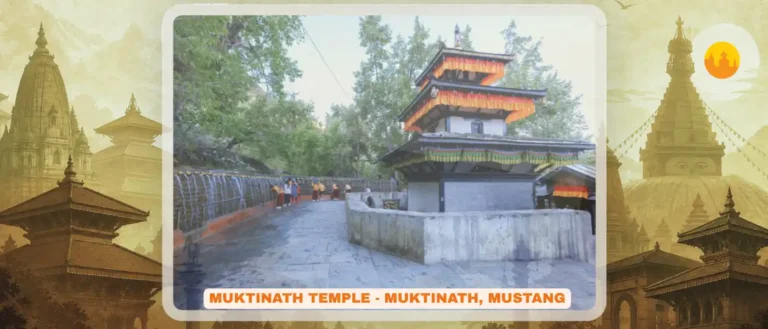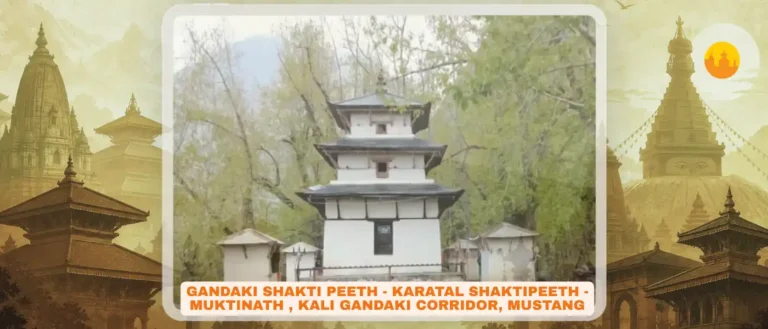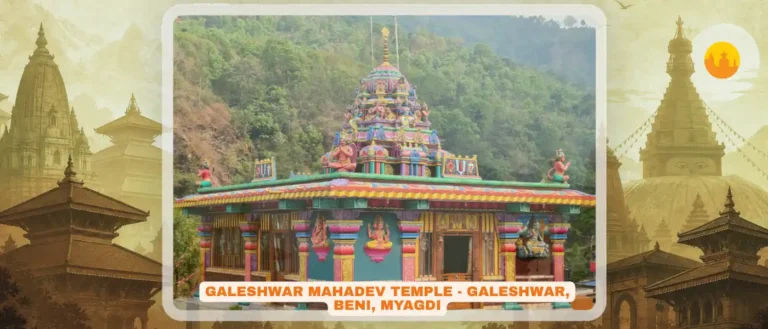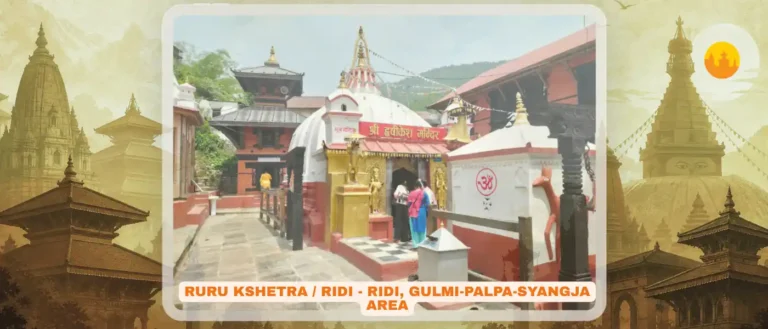
- Estimated Duration
- 5 to 7 days from Kathmandu/India for a comfortable, elder-friendly itinerary. A minimum of 2 buffer days is highly recommended to accommodate weather-related flight cancellations or road blockages in Mustang.
- Best Season
- March to May (Spring) and September to November (Autumn). Spring offers pleasant daytime temperatures and blooming rhododendrons, while Autumn provides the clearest mountain views and highly stable flight conditions post-monsoon.
- Route Origin
- India - Kathmandu - Pokhara
- Route Destination
- Muktinath Temple (Mukti Kshetra), Mustang District, Annapurna Conservation Area, Nepal.
International flight to Kathmandu, domestic flight (or tourist bus/private Jeep) to Pokhara, mountain flight (or 4WD Jeep) from Pokhara to Jomsom, local Jeep/bus to Ranipauwa, and a final 15–20 minute walk (or pony) up to the temple entrance.
Strictly vegetarian and pure Jain/Indian food is widely available in Kathmandu and Pokhara. In the Mustang region (Jomsom, Kagbeni, Ranipauwa), options become basic, focusing on traditional Nepalese Dal Bhat, basic North Indian dishes, and hot soups. Pilgrims with specific dietary preferences or strict timelines should carry dry fruits, energy bars, and ready-to-eat meals.
Not fully wheelchair accessible. The final stretch from Ranipauwa to the temple involves a steady incline and approximately 100–150 concrete steps at the temple premises. Horse riding and local porter-carried palanquins (doli) are available for hire for elderly or mobility-impaired pilgrims.
Sudden altitude gain can trigger Acute Mountain Sickness (AMS). High-velocity winds and sub-zero temperatures are common in the early mornings and evenings. Travel insurance covering emergency high-altitude heli-evacuation is strongly advised for all family members.
Muktinath Temple sits at an altitude of 3,762 meters (12,343 feet). Rapid ascent from Pokhara (822 to Jomsom 2,743m and Muktinath exposes travelers to a sudden drop in oxygen levels.



If you are planning Muktinath from India, you are not just adding one more temple to a Nepal trip. You are entering one of the most powerful Vishnu yatra experiences in the Himalayas.
For many Indian families, Muktinath means Narayana darshan in the land of Kali Gandaki and Shaligram. For Sri Vaishnava devotees, it carries the pull of Divya Desam darshan. For others, it is a once-in-a-lifetime dham where the route, the mountain air, the cold water, and the simple darshan all become part of the memory.
The yatra is also very different from visiting a temple in Chennai, Bengaluru, Hyderabad, Mumbai, Pune, Ahmedabad, Indore, Kolkata, or Bhubaneswar.
You first come into Kathmandu, continue to Pokhara, move toward Jomsom and Ranipauwa, and then reach Muktinath. By the time you arrive, the trip has already changed from normal travel into pilgrimage.
This guide helps you plan that yatra in a way your family can actually enjoy.
You will know how many days to keep, which route to take, what the darshan feels like, when to go, where to slow down, and how to combine Muktinath with other Nepal dhams.
Muktinath does not feel like a usual temple visit.
By the time you reach Ranipauwa, the air has changed, the hills have opened, and the yatra starts feeling quieter.
You are no longer moving through a busy temple town. You are walking toward Narayana darshan in a Himalayan landscape.
For many families, the moment near the 108 water spouts stays with them. The water is cold, the wind is sharp, and the darshan is simple. There is no need for heavy decoration. The place itself carries the feeling.
If your family has come for Divya Desam darshan or Shaligram devotion, this is where the route begins to make sense. Kathmandu and Pokhara bring you closer, but Muktinath gives the yatra its memory.
The experience doesn’t start and end in the dham.
It is also in the road from Pokhara, the early morning movement toward Jomsom, the dry Mustang landscape, the small lodges around Ranipauwa, the first sight of the temple area, and the way families slow down without anyone having to say it.
That is why Muktinath should not be planned like a rushed checklist. Give the place time. Let your family arrive, breathe, take darshan, and carry the feeling back properly.
For most Indian families, a 5 to 7 day plan works best for Muktinath.
If you want a peaceful first-time yatra, keep Kathmandu and Pokhara as your main bases.
Use Pokhara as the comfort stop before and after the Mustang section. Keep one buffer day if possible, especially if you are using the Pokhara-Jomsom flight or travelling with elders.
Choose a slower plan if your family is travelling with parents, children, or anyone who needs rest between travel days.
Muktinath is worth doing with a clear mind, not with everyone tired and worried about the next connection.
This guide is for Indian pilgrims planning Muktinath from outside the immediate Nepal border belt.
If you are coming from South, West, Central, or urban India, your trip will usually depend on flights, Kathmandu arrival, Pokhara connection, local vehicles, and careful family planning.
You may be comparing travel packages. You may be planning for your parents. You may be wondering whether the yatra is worth the distance. You may also want to understand what makes Muktinath different before you commit time, money, and leave days to the trip.
If you already live near the India-Nepal border and have a local bus group, family route, or nearby Indian travel agent, your planning needs may be different.
This guide is written mainly for families who enter Nepal through Kathmandu and need the whole trip explained clearly.
If you are going for Vishnu darshan, Muktinath gives you a rare kind of pilgrimage.
It is not a large temple-town experience. It is Narayana worship in the mountains, close to the Kali Gandaki region, where Shaligram devotion has deep importance for many families.
Many devotees know Muktinath as Mukti Kshetra, the place of liberation. The temple is also revered by Buddhists, so the area has a quiet mix of Hindu and Buddhist presence. You may notice prayer flags, small monasteries, and Buddhist symbols along with Hindu worship.
For Sri Vaishnava families, Muktinath has an added pull because it is counted among the Divya Desams. If that is your reason for going, keep it at the center of the yatra. The route may take effort, but the darshan carries a special place in the heart of Vishnu bhaktas.
Muktinath also feels different because the landscape is part of the devotion.
You are not only entering a temple compound. You are travelling through a Himalayan region where the mountain, wind, water, and distance all prepare you for darshan.
Want to learn more about the Muktinath Dham? You can read our full-coverage here.
The usual route for long-distance Indian pilgrims is:
India to Kathmandu
Kathmandu to Pokhara
Pokhara to Jomsom
Jomsom to Ranipauwa
Ranipauwa to Muktinath Temple
Kathmandu is the main arrival point for many Indian families. Pokhara is the main rest and travel base before Mustang. Jomsom is the important gateway town in Mustang. Ranipauwa is the main settlement near Muktinath where many travellers stay, eat, or pause before going up for darshan.
From Ranipauwa, you continue toward the temple area by local vehicle where available, then walk the final section or use local support depending on your family’s condition and current arrangements.
Comfortable 6 To 7 Day Plan
Day 1: Reach Kathmandu. Settle in, rest, and keep the evening light. If your family has energy, you may visit Pashupatinath, but it is also fine to keep it for the return.
Day 2: Travel from Kathmandu to Pokhara. You can fly or go by road. Road travel takes longer, but it may suit families who prefer not to take too many flights.
Day 3: Travel from Pokhara toward Jomsom, then onward toward Ranipauwa or the Muktinath area if conditions allow. If you fly to Jomsom, morning flights are common because wind often becomes stronger later in the day.
Day 4: Keep this as your main Muktinath darshan day. Start early, move slowly, and do not make elders hurry. After darshan, return to Jomsom or stay near Ranipauwa depending on your plan.
Day 5: Return toward Pokhara. This is a good day to keep flexible because mountain flights and roads can change with weather.
Day 6: Rest in Pokhara or return to Kathmandu.
Day 7: Visit Pashupatinath or another Kathmandu dham, then fly back to India.
Faster 5 Day Plan
A 5 day plan can work for healthy travellers who are comfortable with tight movement. It is better when flights operate smoothly and the group does not need much rest.
For families with elders, a 5 day plan can feel rushed. If your budget and leave days allow it, choose 6 or 7 days. The extra day can make the whole yatra calmer.
Best Plan For First-Time Families
If this is your first Nepal pilgrimage, do not try to pack too many places into the same trip.
Make Muktinath the main purpose. Add Pashupatinath naturally. Add Manakamana, Kagbeni, or other dhams only if the route and family energy support it.
March to May and September to November are usually the most comfortable planning windows for Muktinath.
Spring gives many families a good balance of travel comfort and weather. Autumn is also popular because Himalayan routes often become clearer after the monsoon.
Winter can be beautiful, but the cold can be hard for elders and children. Monsoon can create road trouble in many parts of Nepal, even though Mustang lies partly in a rain-shadow region. If your main reason is darshan, choose comfort over adventure.
If you are travelling with parents, do not select the season only because a package is cheaper. The right time can make the difference between a peaceful yatra and a stressful one.
For Vishnu bhaktas, you may also want to look at Ekadashi dates, family vrata days, or other Narayana-related observances while choosing your travel window. If your family follows Sri Vaishnava tradition, check the dates that matter in your own sampradaya before booking flights and hotels.
You can also use the TirthGo Trip Planner to check upcoming tithi, festival, and deity-day timing before finalising your yatra.
Muktinath is open, windy, and simple. Do not expect the same temple-town facilities you may know from major Indian dhams.
The beauty here is different. It is quieter, colder, and more exposed to the mountain landscape.
The 108 water spouts are one of the most remembered parts of the visit. Many devotees pass under the water or take a ritual bath, but the water can be extremely cold. If your health does not allow it, you can still take darshan respectfully. Do not force elders or anyone unwell to do something only because others are doing it.
Darshan may feel simple compared with large decorated temples. That simplicity is part of Muktinath. The place does not need much decoration to stay in your mind.
You may also notice Buddhist presence around the area. This does not reduce the Hindu importance of the dham. It is part of Muktinath’s living character in Nepal.
Documents For Indian Citizens
Indian citizens do not need a tourist visa for Nepal. Carry a valid Indian passport or voter ID card with photo.
If you are flying, a passport is often the smoother document to carry.
For children, elderly parents, and group travel, check airline and travel-agent document requirements before booking. Do not assume Aadhaar alone will work for every flight or checkpoint.
Flights And Roads
The Pokhara to Jomsom flight is short, but it depends on weather and wind. Flights are usually planned for early morning. Delays and cancellations can happen, so keep some flexibility in the schedule.
The road route avoids flight cancellation, but it can be long and tiring in sections. For elders or people with back, knee, or motion-sickness issues, road comfort matters a lot.
The better option depends on your family.
If your group wants speed and is comfortable with mountain flights, flying can save time.
If your group prefers road travel and can handle a long drive, the road route may work better.
Permits And Local Requirements
Muktinath lies in the Annapurna Conservation Area region. Permit rules and checks can change, and requirements may differ by nationality and route.
Before booking or publishing final travel details, confirm the latest requirement through your travel operator, Nepal tourism office, conservation-area counter, or local authority.
If you are travelling independently, do not leave permit checks to the last moment.
High Altitude Symptoms And Preparation
Muktinath sits at an impressive altitude of 3,762 meters (12,343 feet). You do not need to be afraid of this elevation, but you must respect it. Because a typical itinerary involves a rapid ascent from the low altitude of Pokhara 822 m up to Jomsom 2,743 m and Muktinath, your body is exposed to a sudden, sharp drop in oxygen levels.
Acute Mountain Sickness (AMS) is a real risk here for anyone traveling above 3,000 meters, regardless of age, physical fitness, or past travel history. While some visitors feel perfectly normal, others may experience headaches, intense tiredness, nausea, poor sleep, dizziness, or mild breathlessness. These symptoms should never be ignored—especially when you are traveling with elderly parents or young children.
To ensure a safe, smooth family pilgrimage, follow these practical health preparations:
Acclimatize Correctly: Do not rush the journey. The safest approach is to spend at least one night at an intermediate altitude like Jomsom 2,743 m or Kagbeni to let your body adjust before ascending to Muktinath. Avoid flying into Jomsom and rushing straight to the temple on the same morning if you are traveling with vulnerable family members.
Consult a Physician Pre-Trip: If anyone in your family has pre-existing cardiovascular conditions, respiratory issues (like Asthma or COPD), diabetes, severe blood pressure concerns, or restricted mobility, a medical checkup before leaving India is highly recommended.
Carry Preventive Medication: Speak to your doctor about carrying Acetazolamide (commonly known as Diamox). Ensure no one in your group has a sulfur allergy before this is prescribed. Remember, Diamox is a preventative aid and a prescription medicine—it is not a cure-all or a replacement for a slower travel pace.
Pack Portable Oxygen & Stay Hydrated: Keep small, portable oxygen cans handy in your day bags. While they do not cure severe altitude sickness, they offer immediate, comforting relief for mild, temporary breathlessness while walking up the temple steps. Drink plenty of water and eat light, carbohydrate-rich meals to help your system process the elevation.
Dress for Sudden Exposure: Even if Pokhara and Kathmandu feel warm, the Mustang region is known for biting cold temperatures and high-velocity winds that pick up rapidly after midday. Pack heavy thermal layers, windcheaters, gloves, and beanies for the morning of your darshan.
The Golden Rule of Altitude Safety: Never force an elderly pilgrim or anyone feeling unwell to push through severe symptoms just to finish a timeline. If headache or breathlessness worsens, the absolute best remedy is to immediately stop, rest, and descend to a lower altitude.
Altitude preparation is not meant to scare you. It helps your family enjoy Muktinath with a clear head and steady body.
Kathmandu and Pokhara give you the best hotel and food choices. Vegetarian food is usually manageable there, and Indian food is easier to find.
Once you move toward Jomsom, Kagbeni, Ranipauwa, and Muktinath, keep expectations simple.
Food may be basic. South Indian food may not be available. Carry light dry snacks if your family needs something familiar, but do not overload your bags.
For stay, choose warmth, cleanliness, location, and reliability over luxury claims.
At this altitude, a simple warm room near your route is often more useful than a fancy promise in the wrong location.
Carry:
- warm jacket
- cap and gloves
- good walking shoes
- basic medicines
- water bottle
- light snacks
- sunglasses
- sunscreen
- personal prayer items
- copies of travel documents
Muktinath can be possible for many elders, but it should be planned with care.
The main challenges are altitude, cold, uneven walking, changing weather, and transport uncertainty. If your parent can walk slowly, climb some steps, tolerate cold, and manage basic facilities, the yatra may be possible with a good plan.
If someone needs wheelchair-level access, oxygen support, frequent medical care, or cannot handle cold and uneven ground, think carefully before booking. Choose a travel partner who understands elder pilgrims and can explain the route honestly.
Do not make the trip a test of physical strength.
A slower yatra is often the better yatra.
Pashupatinath
Pashupatinath is the most natural major dham to combine with Muktinath. Many Indian families feel the Nepal pilgrimage becomes complete when Vishnu darshan at Muktinath and Shiva darshan at Pashupatinath are both included.
You can visit Pashupatinath at the beginning or end of the trip. If your return schedule is tight, do it early. If you want the yatra to close with Shiva darshan in Kathmandu, keep it for the last day.
Manakamana
Manakamana can be added when your route between Kathmandu and Pokhara allows it. It works better when you are travelling by road and have enough time. Do not force it into a tight Muktinath plan.
Kagbeni And Kali Gandaki
Kagbeni and the Kali Gandaki region carry special importance for many devotees because of the Shaligram association. If your family has time and the route is practical, this can deepen the yatra.
Keep local rules, river respect, and current access conditions in mind. Do not treat the Kali Gandaki region only as a photo stop.
Pokhara
Pokhara is more than a transit city. It is where your family can rest before or after the Mustang section.
Use it well. A good rest in Pokhara can make Muktinath feel much easier.
Muktinath does not need a festival date to become meaningful. Most families should choose the yatra window based on weather, health, and route comfort first.
If you want to connect the trip with Ekadashi, a Vishnu observance, a family vrata, or another festival period, check the current year’s calendar and local conditions before booking.
Use the TirthGo Trip Planner to check upcoming tithi, festival, and deity-day timing. Mountain travel and festival crowds do not always make the easiest combination for elders, so match the date with your family’s comfort.
Do not plan Muktinath with no buffer day if your family can afford the extra time.
Do not assume the Jomsom flight will operate exactly when planned.
Do not choose a package only because it is cheapest. Check road time, hotel location, meal arrangements, and how the operator handles weather delays.
Do not make elders bathe under very cold water if it is not safe for them.
Do not pack only light city clothes.
Do not expect South Indian food throughout the route.
Do not add too many dhams if your real goal is peaceful Muktinath darshan.
How many days are enough for Muktinath yatra from India?
Most Indian families should keep 5 to 7 days. Choose 6 or 7 days if you are travelling with elders or want a calmer trip with buffer time.
Is Muktinath suitable for elderly pilgrims?
It can be suitable for some elders, but not for everyone. The main concerns are altitude, cold, walking, uneven ground, and travel uncertainty. If your parent has heart, lung, blood pressure, diabetes, or mobility issues, speak to a doctor before planning.
What is the easiest route to Muktinath?
For many long-distance Indian travellers, the usual route is India to Kathmandu, Kathmandu to Pokhara, Pokhara to Jomsom, then Jomsom to Ranipauwa and Muktinath. The final choice depends on flights, weather, road condition, budget, and family health.
Is the Pokhara to Jomsom flight safe?
It is a mountain flight and depends heavily on weather and wind. Flights are usually scheduled early. Delays and cancellations can happen. If your family is nervous about mountain flights, discuss the road option, but remember that the road can also be tiring.
Can we go to Muktinath by road?
Yes, many travellers use road routes through Pokhara and the Kali Gandaki side. The road journey can be long and rough in sections, so check whether your family will be comfortable with it.
Do Indian citizens need a visa for Nepal?
Indian citizens do not need a tourist visa for Nepal. Carry a valid passport or voter ID card with photo. Check airline rules before flying, especially for children and elderly travellers.
Is Muktinath a Divya Desam?
Yes. Muktinath is revered in the Sri Vaishnava tradition as a Divya Desam and is commonly associated with Thiru Saligramam. This is one reason many Vishnu devotees from India include it in their lifetime yatra plans.
What is the best time to visit Muktinath?
March to May and September to November are usually better planning windows. Winter is very cold, and monsoon can complicate road travel in Nepal. Always check current conditions before booking.
Can we combine Pashupatinath and Muktinath?
Yes. Pashupatinath and Muktinath are one of the strongest Nepal pilgrimage combinations for Indian devotees. Keep enough days so you are not rushing between Kathmandu, Pokhara, and Mustang.
Should everyone bathe under the 108 water spouts?
No. Many devotees do, but the water can be very cold. Elders and people with health concerns should not feel forced. Darshan matters more than proving physical toughness.
Want to go on a teerth yatra to Nepal? Contact TirthGo on WhatsApp.
Message TirthGo first for route guidance, community updates, and help connecting with a trusted travel partner only when you ask for trip support.
TirthGo may connect interested pilgrims with independent travel partners and may earn a referral commission if a booking happens.