
- Event Name
- Tamu Losar
- Duration
- 1 day
- Location
- Kathmandu, all over Nepal, especially Gurung communities in Gandaki and other districts, Kathmandu, Pokhara, Tundikhel, Gurung community halls, local monasteries, and public cultural venues.
- Category
- Major Festival
- Tradition
- Tamu Lhosar, Tamu Losar, Gurung New Year, Tamu community, Poush 15, Lohokor, animal-year cycle, Gurung dress, bhangra, kachhad, ghalek, gunyo cholo, Ghatu, Chudka, Thado Bhaka, Tundikhel, Pokhara gatherings, Gurung community programs



Tamu Lhosar is the Gurung New Year in Nepal.
It is observed on Poush 15, which usually falls in late December or early January.
For Gurung families, the day brings a change of lho, or year. The old animal year is sent off, the new one is welcomed, and people gather around family, elders, food, dress, music, and community programs.
In villages, Tamu Lhosar may feel close and personal: relatives visiting, elders blessing younger family members, local groups preparing a program, and neighbors moving between homes.
In Kathmandu, Tundikhel gives the festival its most visible public face. Gurung associations, artists, families, students, and visitors gather for stage programs, food stalls, dances, songs, speeches, and traditional dress.
Pokhara also has a strong Tamu Lhosar presence because of the Gurung community’s deep connection with Gandaki and the western hills.
Tamu Lhosar is different from Sonam Lhosar and Gyalpo Lhosar.
Sonam Lhosar belongs mainly to Tamang communities. Gyalpo Lhosar belongs mainly to Sherpa and Tibetan Buddhist communities. Tamu Lhosar belongs to Gurung, or Tamu, communities.
Tamu is the name many Gurung people use for themselves. Lhosar means New Year.
Tamu Lhosar marks the beginning of a new year in the Gurung calendar. The year turns through a cycle of animal signs, and after twelve years the animal cycle begins again.
The festival is more than a date on the calendar. It is a community New Year, a family return, and a public moment when Gurung language, dress, songs, dances, food, and elders come forward together.
For many families, the day is also a way to keep a link with ancestral memory. A person may live in Kathmandu, Pokhara, abroad, or far from the old village, but Tamu Lhosar brings the family back to Gurung identity for at least one full day.
Tamu Lhosar is observed on the 15th day of Poush in the Nepali calendar. In the English calendar, it usually falls in late December or early January.
Family greetings and community events usually focus on the main day.
Larger public programs in Kathmandu, Pokhara, district headquarters, schools, community halls, or overseas Gurung associations happen on the same day or near the festival date.
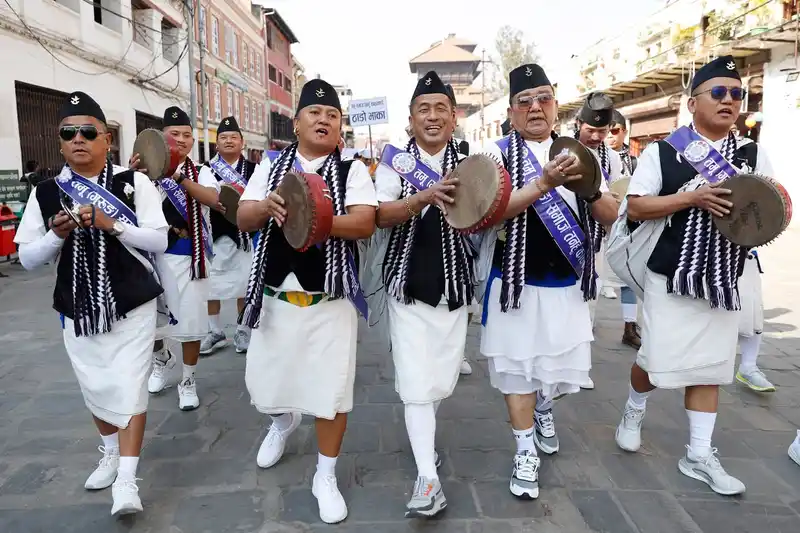
Tamu Lhosar belongs to Gurung communities across Nepal and the wider Gurung diaspora.
In Nepal, Gurung settlement is especially strong in Gandaki and the western hill regions, including Kaski, Lamjung, Gorkha, Tanahun, Syangja, Manang, Mustang, Parbat, and nearby areas.
Kathmandu and Pokhara become highly visible because many Gurung families live, study, work, or gather there.
The festival carries both spiritual and cultural layers.
Gurung life includes Buddhist practice, older Bon and shamanic strands, local ancestral traditions, and community customs passed through oral memory.
Some families may visit a monastery or offer prayers. Others may focus more on elders, food, dress, music, and a public samaj program. In many homes, these sides sit together inside the same New Year.
The mythic heart of Tamu Lhosar sits in the turning of lho.
Gurung tradition divides time into a twelve-year cycle called Lohokor. Each year is linked with an animal sign, and the cycle resets after twelve years.
The twelve animals are Eagle, Serpent, Horse, Sheep, Monkey, Bird, Dog, Deer, Mouse, Cow, Tiger, and Cat.
When Tamu Lhosar arrives, the old lho leaves and a new lho begins. The year has a name, an animal sign, and a place inside community memory.
Children may first meet the cycle through posters, songs, stage greetings, or family talk.
Elders may speak of the lho with more familiarity, linking the New Year with age, fortune, temperament, and the character of the coming year.
Gurung myth and ritual memory also live through oral traditions.
Pachyu, Ghyapri, and Bonpo Lama traditions have carried stories, chants, ancestral histories, and ritual knowledge across generations. In Gurung culture, the old stories are not kept only in books; they are carried through performance, ritual speech, song, and community memory.
Tamu Lhosar is not a generic Buddhist New Year. It has Buddhist-Himalayan links, but it also carries Gurung ancestral tradition, oral history, village memory, and the Lohokor cycle in its own way.
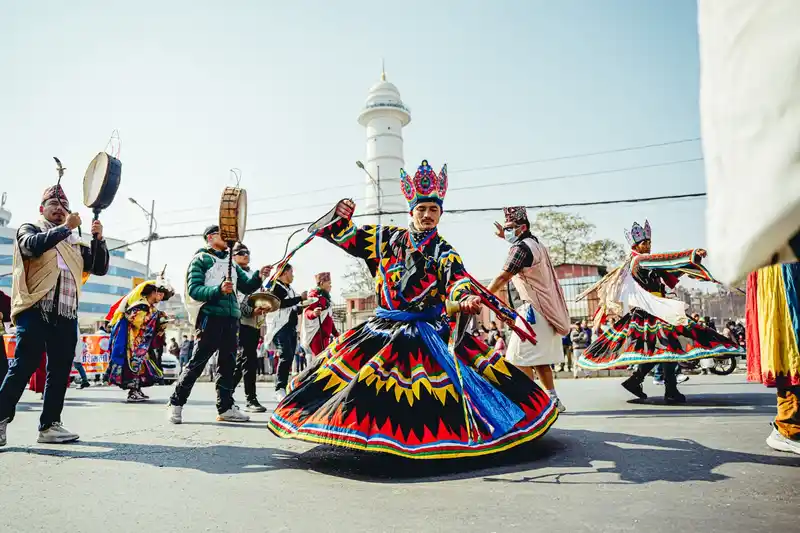
Tamu Lhosar is celebrated wherever Gurung communities live.
In Gandaki and the western hills, the festival can feel close to the older village world. Families gather, local groups organize programs, elders are visited, and traditional songs and dances may appear in community spaces.
Pokhara has a strong Gurung presence, so Tamu Lhosar is often visible through community gatherings, cultural programs, restaurants, family visits, and public events. For many people, Pokhara feels like a natural city base for seeing the Gurung side of the festival.
In Kathmandu, Tundikhel is the big public space to watch. When programs are organized there, the ground can fill with Gurung families in traditional dress, stage performances, food stalls, music, speeches, youth groups, district associations, and visitors from other communities.
Boudhanath and Swayambhunath may also be part of the day for families who include Buddhist prayer or stupa visits in their New Year routine.
Still, Tamu Lhosar is not centered only on a famous dham. A Gurung samaj hall, a local monastery, a village ground, or a family home can carry the festival just as strongly.
Tamu Lhosar is mainly a community New Year, so the most natural places are not always formal dhams.
Boudhanath can be part of the day for Gurung families in Kathmandu who begin the New Year with Buddhist prayer, kora, lamps, or a quiet visit before joining relatives and public programs.
Swayambhunath is another Kathmandu Valley place where families may go for blessings and stupa worship. It also gives visitors a way to see how Buddhist sites and community festivals overlap in the city.
Local Gurung monasteries and community religious spaces can feel more personal than famous landmarks. A family may go where their lama, elders, relatives, or community group already gather.
Tundikhel is not a dham, but it is central to the Kathmandu experience of Tamu Lhosar. For people outside the Gurung community, it is often the easiest place to see the public cultural side respectfully.
At a family level, Tamu Lhosar begins with visits, greetings, blessings, food, and togetherness. Elders receive respect. Younger people meet cousins and relatives. Homes feel open.
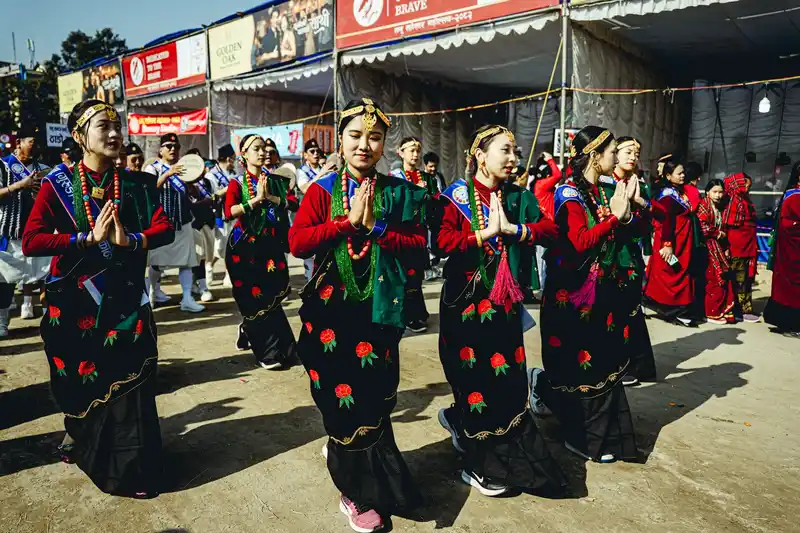
Traditional Gurung dress makes the day instantly recognizable. Men may wear bhangra and kachhad. Women may wear ghalek, gunyo cholo, ornaments, and community dress styles.
In the city, this dress becomes a public statement: the New Year belongs to the Tamu community.
Food depends on family and region. You may find sel roti, meat dishes, tea, homemade raksi where customary, snacks, and meals prepared for guests. The table is part of the welcome.
Music and dance carry the public mood.
Ghatu, Chudka, Thado Bhaka, Kaura or Kauda styles, and other Gurung-linked performances may appear depending on the program and community. Not every event shows every form, but song and dance are a major part of how the New Year becomes public.
At Tundikhel, the festival can feel like a Gurung community gathering in the middle of Kathmandu. People come for the stage, food stalls, photos, speeches, music, old friends, district groups, and the chance to be visibly Tamu in the capital.
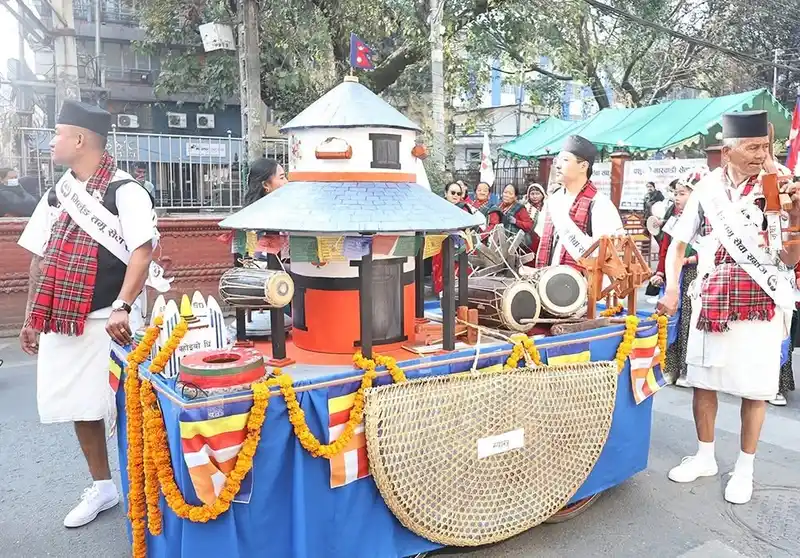
Dress, Pride And Public Belonging
Tamu Lhosar is a day when Gurung dress moves from the family cupboard into public space.
In villages, clothing may feel natural and inherited. In Kathmandu or Pokhara, it can feel more intentional. Young people who spend most of the year in school uniforms, office clothes, or casual city wear dress up to meet the community as Tamu.
That public visibility has emotional weight. It lets children see their own culture on stage, in the crowd, in photos, and in the middle of the city.
Ghatu, Chudka And Thado Bhaka
Gurung cultural programs often bring music and dance to the center.
Ghatu is strongly associated with Gurung culture and carries stories of a king and queen, longing, loss, and memory through song and dance. Full Ghatu traditions have their own season and ritual setting, so Tamu Lhosar programs may show selected stage forms rather than the entire old village performance.
Chudka and Thado Bhaka bring a different kind of energy. They are easier to meet in public programs because they work well on stage, in community gatherings, and in festive crowds.
These performances do more than entertain.
They help younger Gurung people meet cultural forms that may otherwise stay far from daily city life.
Food, Guests And Elders
Tamu Lhosar is also a household festival.
Families cook, serve guests, visit relatives, and give time to elders. A person may attend a public program in the afternoon, but the day often begins or ends with family.
In many homes, the New Year meal is where the festival becomes intimate. The public stage may show the community; the kitchen shows the family.
Tundikhel In Kathmandu
Tundikhel gives Tamu Lhosar a public Kathmandu stage.
When the program is held there, you can expect a large open-ground celebration with Gurung associations, food stalls, cultural performances, speeches, music, and people in traditional dress. Gurung students, workers, families, artists, and district groups living in the capital also use it as a meeting point.
For visitors from other communities, Tundikhel is often the most natural way to experience Tamu Lhosar. You can watch the program, try food, listen to songs, and see Gurung dress and dance without entering a private family space.
Not The Same As Sonam Or Gyalpo Lhosar
Nepal has several Lhosar traditions, and each has its own community.
Tamu Lhosar is the Gurung New Year. Sonam Lhosar is the Tamang New Year. Gyalpo Lhosar belongs mainly to Sherpa and Tibetan Buddhist communities.
They share the New Year idea, but the dates, communities, animal cycles, music, dress, food, and public programs are different.
If you want to experience Tamu Lhosar in Kathmandu, look first for the current year’s Tundikhel program notice from Gurung associations, local media, and community pages. The date is stable in the Nepali calendar, but venues, start times, stage programs, and crowd arrangements can change.
Tundikhel is usually the easiest public place for visitors. Go with a respectful mood, give space to families and elders, and ask before taking close photos of people in traditional dress.
For a quieter day, Boudhanath or Swayambhunath can be paired with a family or community program if the household follows a Buddhist prayer routine. These sites are not the whole festival, but they can be part of the New Year for some families.
Pokhara is a strong place to feel Tamu Lhosar outside Kathmandu. Check local community programs, lakeside events, Gurung samaj notices, and district-level updates before planning around a public gathering.
In Gurung villages or hill districts, travel can depend on winter weather, local transport, road condition, and family invitations. Village celebrations are often community-based, so a local contact helps.
What is Tamu Lhosar in Nepal?
Tamu Lhosar is the Gurung New Year in Nepal. It is observed with family gatherings, elders’ blessings, food, traditional dress, songs, dances, community programs, and public celebrations in places such as Tundikhel and Pokhara.
When is Tamu Lhosar?
Tamu Lhosar falls on Poush 15 in the Nepali calendar, usually in late December or early January. The exact English date changes each year.
Is Tamu Lhosar the same as Sonam Lhosar?
No. Tamu Lhosar is the Gurung New Year. Sonam Lhosar is the Tamang New Year, and Gyalpo Lhosar belongs mainly to Sherpa and Tibetan Buddhist communities.
What is the animal cycle in Tamu Lhosar?
Gurung tradition uses a twelve-year Lohokor cycle. The animals are Eagle, Serpent, Horse, Sheep, Monkey, Bird, Dog, Deer, Mouse, Cow, Tiger, and Cat. After twelve years, the cycle begins again.
Where can I experience Tamu Lhosar in Kathmandu?
Tundikhel is the main public place to look for Tamu Lhosar programs in Kathmandu when organized. Boudhanath, Swayambhunath, Gurung samaj venues, and local community halls may also be part of the day.
What do people wear on Tamu Lhosar?
Many people wear traditional Gurung dress. Men may wear bhangra and kachhad, while women may wear ghalek, gunyo cholo, ornaments, and other Gurung dress styles.
What music and dance are connected with Tamu Lhosar?
Tamu Lhosar programs may include Ghatu, Chudka, Thado Bhaka, Kaura or Kauda styles, and other Gurung songs and dances. The exact program depends on the community and venue.
Is Tamu Lhosar only a Buddhist festival?
Tamu Lhosar has Buddhist-Himalayan links, but it is best understood as the Gurung New Year. Gurung culture also carries older ancestral, shamanic, Bon, and local traditions, so the festival is broader than one religious label.