
- Event Name
- Gyalpo Lhosar - Tibetan New Year
- Duration
- 3 days
- Location
- Kathmandu, Tengboche, All over Nepal by Sherpa and Tibetan Buddhist communities, Boudhanath, Swayambhunath, Tengboche, Khumbu monasteries, Kathmandu gompas, and public cultural venues when programs are organized.
- Category
- Major Festival
- Tradition
- Gyalpo Lhosar, Gyalpo Losar, Sherpa New Year, Tibetan New Year, Losar, Tibetan animal-year cycle, old-year clearing, guthuk, khapse, changkol, chhaang, prayer flags, kora, cham dance, syabru, monastery prayer, Boudhanath, Swayambhunath, Tengboche, Khumbu
Gyalpo Lhosar - Tibetan New Year Day-by-Day Schedule for 2027 (2083 BS)
| Day | Date | Ritual / Event | Highlights & Notes |
|---|---|---|---|
Day 1 | Tuesday | March 9, 2027 Shukla Pratipada | Falgun 25, 2083 BS | Losar Opening And Changkol | The main Losar celebration begins with changkol, a traditional drink made from chhaang. Families also prepare food, visit monasteries, offer prayers, and begin New Year greetings. |
Day 2 | Wednesday | March 10, 2027 Shukla Dwitiya | Falgun 26, 2083 BS | King's Losar / Gyalpo Losar | The second main day is known as King's Losar, or Gyalpo Losar. Sherpa and Tibetan Buddhist families continue prayers, blessings, kora, monastery visits, and family gatherings. |
Day 3 | Thursday | March 11, 2027 Shukla Tritiya | Falgun 27, 2083 BS | Feast, Dance And Community Gathering | Families and communities gather for feasts, khapse, songs, dances, cultural programs, and continuing monastery worship depending on the local schedule. |



Gyalpo Lhosar is the Sherpa and Tibetan Buddhist New Year observed in Nepal. It follows the Tibetan lunar calendar and usually falls around February or March in the English calendar.
For Sherpa families, Tibetan Buddhist communities, and many Himalayan Buddhist households, the festival brings a new year into the home, the monastery, and the wider community.
People clean and prepare houses, make festival food, visit gompas, offer prayers, raise prayer flags, meet relatives, and welcome the new lho, or year.
In Kathmandu, Boudhanath and Swayambhunath become natural gathering points.
In Khumbu, monasteries such as Tengboche and village gompas hold the deeper Himalayan feeling of the festival: prayer halls, butter lamps, mountain air, relatives returning home, and families starting the year with blessings.
Gyalpo Lhosar is not the same as Sonam Lhosar or Tamu Lhosar. Sonam Lhosar is the Tamang New Year. Tamu Lhosar is the Gurung New Year. Gyalpo Lhosar belongs mainly to Sherpa, Tibetan Buddhist, and related Himalayan communities.
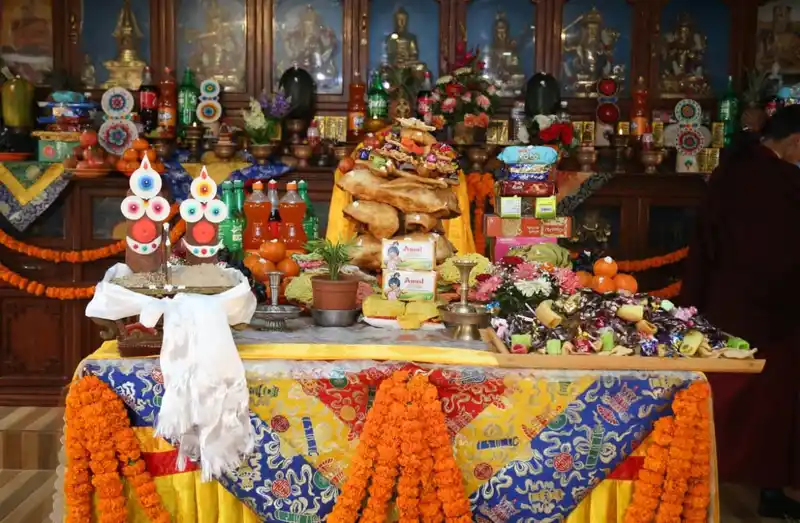
The word Lhosar means New Year.
In Gyalpo Lhosar, the year turns with the Tibetan lunar calendar. The festival welcomes a new animal year and lets families clear away the old year’s heaviness before entering the new one.
The animal cycle itself resets after twelve years. In the wider Tibetan calendar system, animal signs also combine with elements, creating a larger sixty-year cycle.
That clearing is practical and spiritual at the same time. Homes are cleaned. Old things may be put in order. Food is prepared. Monasteries hold prayers. Families visit elders and receive blessings. Prayer flags are raised so wind can carry prayers across the new year.
The festival has deep Tibetan Buddhist roots, but in Nepal it is also a Sherpa and Himalayan community celebration. It carries religion, language, dress, food, mountain memory, migration stories, and family belonging together.
Gyalpo Lhosar falls on the first day of the Tibetan lunar calendar, usually in February or March. The exact English date changes each year, so use the current Nepali or Tibetan calendar for that year’s observance.
The festival is often spoken of as a New Year season rather than only a one-day event.
The main public and family celebrations usually focus on the first three days, while the wider Losar period can continue for up to fifteen days in some communities.
Before New Year day, families may prepare the home, make khapse, cook guthuk, clean household spaces, and arrange prayer flags. The day itself brings greetings, visits, blessings, food, and monastery worship.
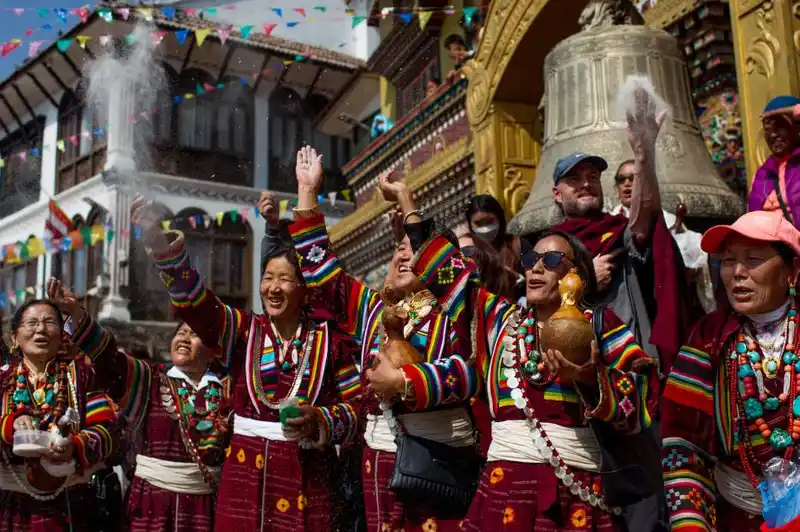
For Sherpa and Tibetan Buddhist families, Gyalpo Lhosar begins with the wish to enter the new year cleanly. The old year is released through cleaning, food, prayer, and ritual. The new year begins with blessings, family respect, and a fresh relationship with the household and community.
Guthuk is part of that transition in many Tibetan Buddhist families.
It is a soup prepared before Losar, often linked with the 29th day of the last lunar month. Some families include symbolic dumplings or playful signs inside the meal, turning the evening into both cleansing and family humor.
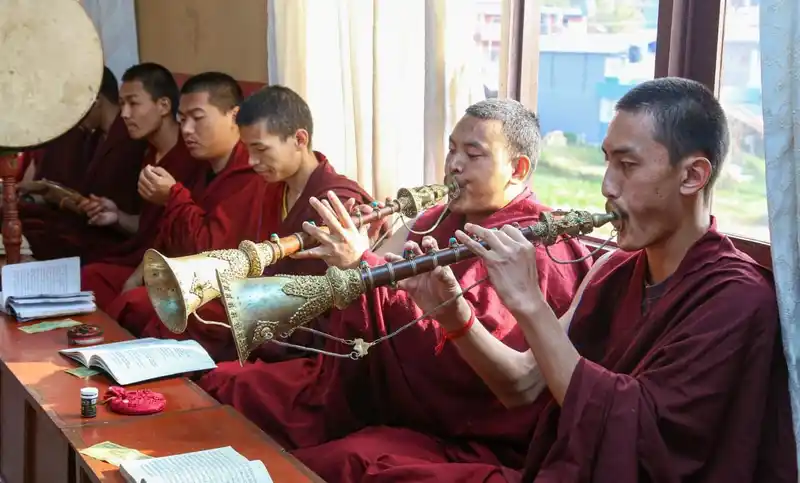
Monastery prayer gives the festival its devotional center. Families may visit a gompa, offer lamps, make kora, receive blessings from lamas, and pray for health, peace, and a good year. In Sherpa communities, the monastery is not only a religious building; it is a community anchor.
Gyalpo Lhosar is observed wherever Sherpa, Tibetan Buddhist, Bhotiya, and related Himalayan communities live.
In Nepal, the strongest local feeling comes from Khumbu and other Himalayan settlements, Kathmandu Valley, and towns where Sherpa and Tibetan Buddhist families have settled for education, work, business, and migration.
Boudhanath is a major Kathmandu gathering place. The stupa circle fills with kora, prayer wheels, lamps, monks, nuns, families in traditional dress, and people meeting relatives and friends around the Boudha area.
Swayambhunath also belongs naturally to the day for Kathmandu Valley devotees. Families may climb the hill, offer lamps, make kora, and take the New Year blessing from a stupa that holds both Newar Buddhist and Tibetan Buddhist life.
In Khumbu, the festival feels more local and rooted.
Tengboche, Pangboche, Thame, Khumjung, Namche, and other village gompas may carry the New Year through prayers, family visits, food, and the rhythm of Sherpa community life.
Travel and trekking schedules may make the festival look different from one village to another, but the monastery and family remain close to the center.
Public cultural programs in Kathmandu, including large open venues when organized, can make Gyalpo Lhosar visible for people outside the community. These programs may include Sherpa and Tibetan dress, songs, dances, speeches, food stalls, and community organization stalls. The exact venue changes by year, so current notices are worth checking.
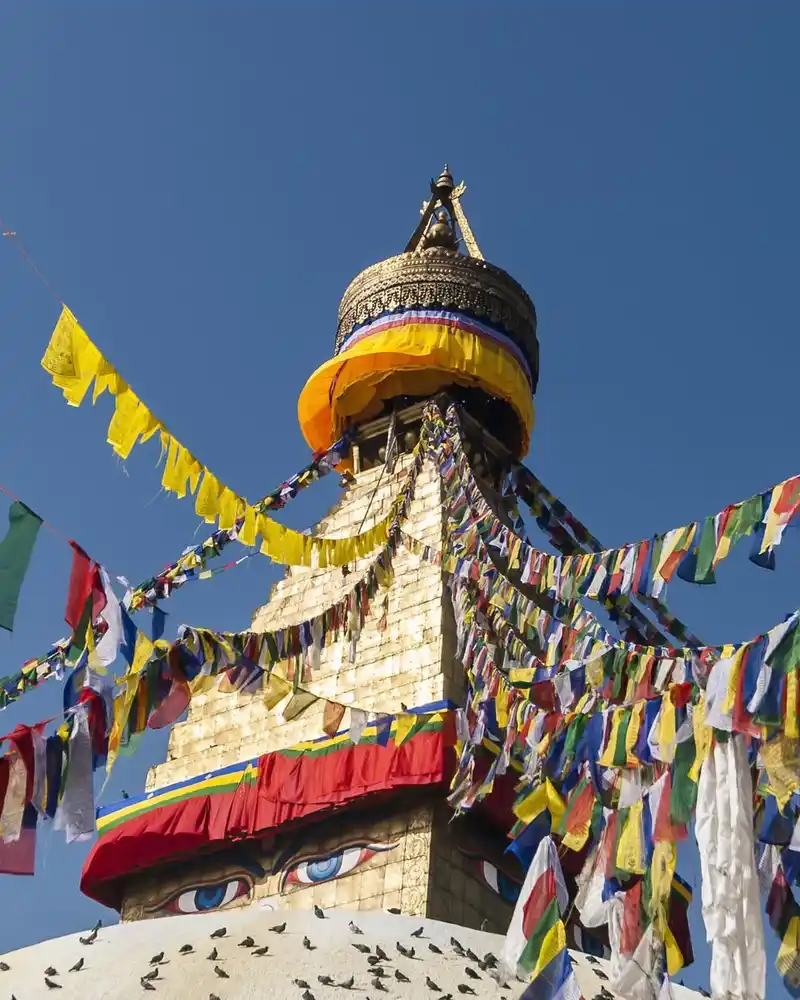
Boudhanath is the main public Buddhist site for Gyalpo Lhosar in Kathmandu. The stupa gives the festival a shared space where Sherpa, Tibetan Buddhist, Himalayan, Newar Buddhist, and other visitors can gather without turning the day into a private family event.
Swayambhunath gives another Kathmandu Valley option. It is especially meaningful for devotees who want stupa worship, lamps, prayer wheels, and a hilltop setting without staying only around Boudha.
Tengboche Monastery in Khumbu is a strong Sherpa Buddhist landmark.
It is best known for Mani Rimdu, but it also belongs to the wider Sherpa Buddhist calendar and community life around Gyalpo Lhosar. The monastery’s prayer hall, Shakyamuni Buddha image, mani stones, prayer flags, and mountain setting make it a natural reference point for Sherpa New Year.
Khumbu village gompas can be more meaningful to local families than famous names. A family may go to the monastery where their lama is known, where relatives gather, and where the year’s prayers are part of ordinary community life.
At Boudhanath, Gyalpo Lhosar can look like steady movement around the stupa.
People make kora, turn prayer wheels, offer lamps, greet relatives, take photos in traditional dress, and move between the stupa, monasteries, cafes, and family meeting points.
At Swayambhunath, the day may include climbing the steps, making kora, offering lamps, and sitting near the stupa after prayer. The crowd may be mixed, but Sherpa and Tibetan Buddhist families are easy to notice through dress, language, and greetings.
At a Khumbu gompa, the scene is more intimate.
Families may arrive with offerings, sit through prayers, meet elders, drink tea, eat together, and return home through cold paths, stone houses, and prayer flags. The festival belongs to the monastery, but also to the kitchen and the family room.
At public cultural programs, the day becomes more visible and lively. You may see Sherpa and Tibetan dress, dances, music, food stalls, speeches, community groups, flags, and young people meeting friends. For visitors, these public programs are usually easier to approach than private home gatherings.
Guthuk Before Losar
Guthuk is a soup eaten before Losar in many Tibetan Buddhist households.
The name is often connected with the number nine and the final days of the old year. Families may prepare it with grains, beans, vegetables, meat, or household ingredients depending on custom.
In some homes, dumplings inside the soup carry playful signs.
A piece of chili, charcoal, wool, or another item can become a joke about someone’s personality or the old year’s habits. The meal helps the family release heaviness before the New Year.
Khapse And New Year Food
Khapse, a deep-fried festive pastry, is strongly associated with Losar. Families may prepare it before guests arrive, serve it with tea, and keep it ready for visits across the festival days.
Other food varies by household.
Some families prepare meat dishes, nun chiya (tea made with salt and ghee), chhaang or changkol where customary, and New Year meals for relatives and guests. The table is part of the welcome: no New Year feels complete if visitors are not fed properly.
Prayer Flags And Home Preparation
Before Gyalpo Lhosar, families clean homes, prepare offerings, and may raise fresh prayer flags. The flags carry prayers through the wind and make the New Year visible from rooftops, courtyards, village paths, and monastery areas.
In Himalayan settlements, this can be among the most beautiful parts of the season: whitewashed walls, cold air, mountain light, new flags, and homes ready for visitors.
The Tibetan Animal-Year Cycle
Gyalpo Lhosar follows the Tibetan lunar New Year, where the year changes through a cycle of animal signs. The twelve animals are Mouse or Rat, Ox, Tiger, Rabbit or Hare, Dragon, Snake, Horse, Sheep, Monkey, Bird or Rooster, Dog, and Pig or Boar.
The animal cycle itself repeats every twelve years.
In the full Tibetan calendar system, the animals combine with five elements: Wood, Fire, Earth, Iron, and Water. Each element covers two years, one male and one female. Together, the animal and element pattern resets after sixty years. This sixty-year cycle is known in Tibetan calendar language as a rabjung cycle.
This is why the New Year is named with more than the animal alone in formal Tibetan calendar language. A year may be spoken of as a Wood Snake year, a Fire Horse year, an Earth Dog year, or another element-animal pairing.
Losar marks the change from one named year to the next, while the sixty-year cycle keeps the larger count.
In Nepal, people may meet this cycle through monastery calendars, family conversations, community posters, and greetings around Boudha, Swayambhu, Khumbu, and Sherpa gatherings.
The new animal year becomes part of how people talk about hope, caution, fortune, health, travel, and family life.
The cycle also helps explain why Losar is a season of preparation. Before welcoming the new year, families clear the old year through guthuk, prayers, offerings, and household preparation. Then the new animal year is received through greetings, blessings, prayer flags, and visits.
Dance, Dress And Community Programs
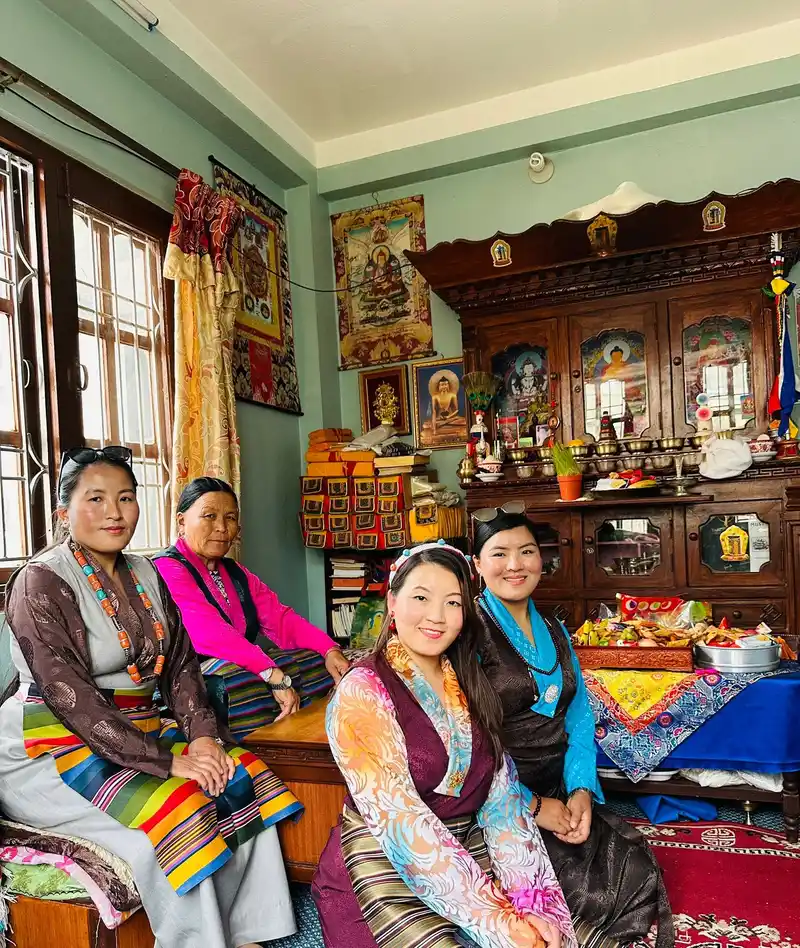
Gyalpo Lhosar is also a public cultural festival. Sherpa and Tibetan Buddhist dress, dances such as syabru, monastery-related performances, and community stage programs bring the festival into public space.
In Kathmandu, public programs can help younger people, city families, and visitors experience the festival beyond private homes and monastery prayer. Still, the cultural program is not the whole festival. The home, the food, the elders, and the gompa remain just as central.
Not The Same As Sonam Or Tamu Lhosar
Nepal has several Lhosar traditions, and each has its own community setting.
Gyalpo Lhosar belongs mainly to Sherpa and Tibetan Buddhist communities. Sonam Lhosar is the Tamang New Year. Tamu Lhosar is the Gurung New Year.
They share a New Year idea and Buddhist-Himalayan calendar feeling, but the communities, dates, dress, songs, foods, and public programs are not the same.
If you want to experience Gyalpo Lhosar in Kathmandu, Boudhanath is the easiest place to begin. Go early for quieter kora and lamps, or later if you want the more social New Year crowd.
Swayambhunath can be paired with Boudhanath in the same day, but both places may be busy. Wear comfortable shoes, keep your voice low near prayer spaces, and give room to families doing kora or making offerings.
If public programs are announced in Kathmandu, check the current year’s Sherpa association, monastery, municipality, and social media notices. Venues can shift, and some programs happen before or after the exact New Year date.
For Khumbu, treat Gyalpo Lhosar as a community and travel question, not only a calendar date. Flights to Lukla, winter weather, trekking route conditions, lodge availability, and local monastery schedules can all affect the visit. A famous monastery may not always be the best place if your travel timing does not match local programs.
If you are outside the Sherpa or Tibetan Buddhist community, public programs and major stupas are the most natural entry points. Private family gatherings and small village gompas are best approached through invitation or local connection.
What is Gyalpo Lhosar in Nepal?
Gyalpo Lhosar is the Sherpa and Tibetan Buddhist New Year observed in Nepal. It is marked through monastery prayers, home cleaning, family visits, guthuk, khapse, prayer flags, Boudhanath, Swayambhunath, Khumbu gompas, and community programs.
When is Gyalpo Lhosar?
Gyalpo Lhosar falls on the first day of the Tibetan lunar calendar, usually in February or March. The exact English date changes each year, so use the current Nepali or Tibetan calendar for that year’s observance.
Is Gyalpo Lhosar the same as Sonam Lhosar?
No. Gyalpo Lhosar belongs mainly to Sherpa and Tibetan Buddhist communities. Sonam Lhosar is the Tamang New Year, and Tamu Lhosar is the Gurung New Year.
Where can I go for Gyalpo Lhosar in Kathmandu?
Boudhanath and Swayambhunath are the main public Buddhist places to visit in Kathmandu. Public cultural programs may also be organized by Sherpa or Himalayan community groups, depending on the year.
What do people eat during Gyalpo Lhosar?
Many families prepare khapse, tea, festive meals, and guthuk before Losar. Guthuk is a soup connected with clearing out the old year and entering the New Year with a lighter heart.
Is Tengboche the main place for Gyalpo Lhosar?
Tengboche is a major Sherpa Buddhist monastery and a strong Khumbu reference point, but local families may celebrate at many village gompas. Tengboche is best known internationally for Mani Rimdu, so check local schedules before assuming a large public Gyalpo Lhosar event there.
Can visitors attend Gyalpo Lhosar programs?
Yes, public programs and major stupas are usually approachable for visitors. Private family gatherings and small monastery rituals need more care, and it is best to follow local guidance before photographing people or rituals closely.