
- Event Name
- Udhauli Parva
- Duration
- 15 days
- Location
- Kathmandu, and eastern Nepal, Kirat communities, Dharan, Budasubba, Khotang, Bhojpur, Dhankuta, Kathmandu Kirat gatherings, Sakela grounds, and Kirat sacred places
- Category
- Major Festival
- Tradition
- Udhauli, Sakela Udhauli, Sakewa, Sakenwa, Sili, Mundhum, Mangsir Purnima, nature worship, ancestor worship, harvest thanks, dhol, jhyamta, Rai, Limbu, Sunuwar, Yakkha, Chasok Tangnam, Budasubba, Dharan



Udhauli is the harvest-side Kirat festival observed around Mangsir Purnima. It comes when the cold season has begun to enter the hills and the main work of the agricultural year has already passed.
For Rai, Limbu, Sunuwar, Yakkha, and other Kirat families, the festival is a time of thanks.
The year has given grain, food, rain, labor, and survival, and the community gathers before winter fully settles in.
Many people recognize Udhauli through Sakela or Sakewa dance, but the harvest mood gives the gathering its real color. People meet after the work of the year, wear community dress, share food, greet elders, and dance with dhol and jhyamta.
In eastern Nepal, Udhauli belongs close to stored grain, family land, winter movement, and village dance grounds.
In Kathmandu, it becomes a reunion for people from eastern districts who now live, study, or work in the capital.
Udhauli is paired with Ubhauli, but they have different dates. Ubhauli comes earlier in Baisakh, before the farming season. Udhauli comes in Mangsir, after harvest.
Udhauli means the downward movement of the season.
It is linked with the old pattern of moving toward lower and warmer places as winter begins. People, birds, animals, and seasonal life all respond to cold in their own way, and Udhauli remembers that turn.
The festival also belongs to the harvest.
Families thank the land, crops, forests, rivers, weather, household labor, and ancestors that carried the year.
That is why Udhauli feels warmer than its winter date may suggest.
The field work has quieted. People have time to gather. The dance ground becomes a place to look back at the year with gratitude.
Udhauli is observed around Mangsir Purnima, usually in November or December.
The main worship begins around the full moon day. In many places, Sakela or Sakewa gatherings continue for several days, and some communities hold programs across a longer festival season.
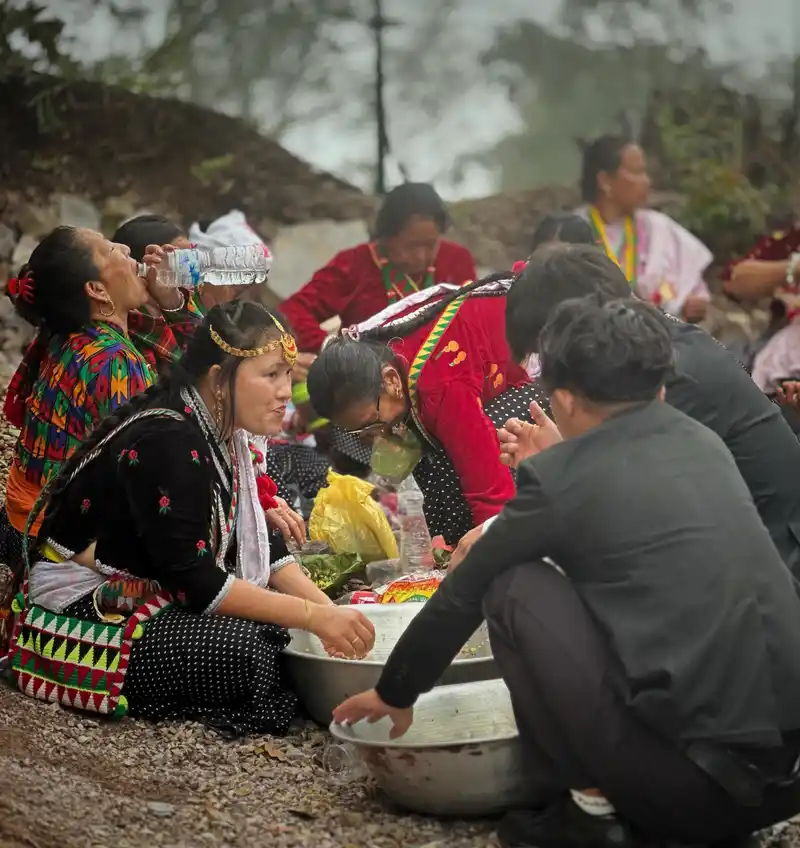
By Mangsir, Kirat communities are no longer standing at the beginning of the farming year. They are looking back at it.
Udhauli is not experienced by every Kirat community in one uniform way.
Different Rai groups may name the practice differently: Sakela, Sakewa, Sakenwa, Toshi, and other local forms. In Udhauli, those names sit inside a shared harvest feeling.
Among Rai communities, Sakela or Sakewa brings that gratitude into public space. The circle, the dhol, the jhyamta, and the Sili steps gather people after harvest and before the colder months.
For Limbu communities, this season also brings Chasok Tangnam, a harvest festival connected with new crops, ancestors, and Yuma-Theba sacred memory.
Sunuwar and Yakkha communities also carry their own seasonal practices, shaped by local ritual specialists, household customs, and district life. The shared mood is gratitude after the year’s work.
Udhauli draws its deeper meaning from Mundhum, the Kirat oral and ritual tradition.
Mundhum does not separate food from the sacred world. Grain comes through land, rain, weather, animal life, household labor, ancestors, and the unseen order that keeps life moving. Udhauli brings that understanding into the harvest season.
Sakela Sili carries this memory through the body. In the Udhauli season, Sili can show harvesting, carrying grain, storing food, weaving, hunting, birds, animals, and winter preparation. The movement says what plain explanation cannot: the year has been lived through work.
Some Rai traditions remember Hetchhakuppa as an early performer of Sili. Other Sili forms carry the memory of Tayama-Khiyama, Sumnima-Paruhang, hunters, ancestors, animals, and village life.
In Rai traditions, Sumnima and Paruhang are often remembered as ancestral and divine figures. In Udhauli, earth and sky feel close because the crop has already passed through both.
Limbu sacred memory brings another harvest layer through Yuma Sammang, Theba Sammang, and Chasok Tangnam. Around Dharan, Budasubba adds a local story world where Kirat and Limbu memory, bamboo, vows, old kings, Theba-Yuma, Shiva-Parvati, and popular devotion meet.
So Udhauli is not just a repeat of Ubhauli later in the year. It is the closing side of the same seasonal wisdom.
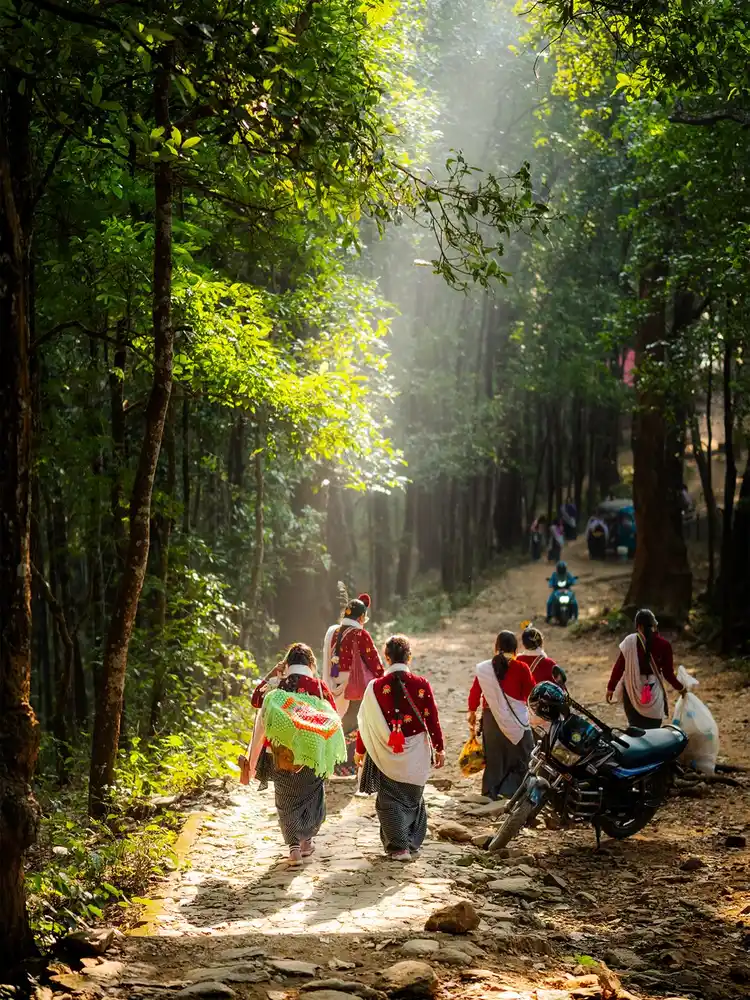
Udhauli is strongest in eastern Nepal, where harvest, winter travel, family return, and community dance still remain close to daily life.
Khotang, Bhojpur, Dharan, Dhankuta, Sankhuwasabha, Okhaldhunga, Udayapur, Ilam, Panchthar, Taplejung, Morang, Sunsari, and nearby areas all carry Udhauli through harvest gatherings, Sakela grounds, family visits, and district-level programs.
In villages, Udhauli may feel like a release after work.
Grain has been gathered. Families have more time to meet. Elders sit near the program, and the Sakela circle opens with the mood of thanks rather than beginning.
Dharan is a popular celebration area because of Budasubba and the old Bijayapur sacred setting.
The temple may become part of a wider day that includes family visits, local food, community programs, and movement through the city.
Kathmandu gives Udhauli a harvest-season city form.
People from eastern districts meet at public grounds and community venues, often using the gathering as a winter-season reunion with relatives, friends, district associations, and community elders.
Budasubba in Dharan is the main dham linked with Udhauli.
The temple sits in Bijayapur, an old sacred and historical area above Dharan. Many visitors know it through bamboo stories, vows, Limbu and Kirat memory, Buddhi Karna Raya Khebang Limbu, and the popular devotion around Budha Subba.
Budasubba gives Udhauli a connection with Kirat sacred geography in Dharan.
For local families, the sacred center may also be the harvest offering at home, the village Sakela ground, the local Kirat altar, or the community space where elders and relatives gather after the year’s work.
In Kathmandu, Kirat community venues carry worship, elders, offerings, music, dance, food, and community belonging during a season when many people are far from the fields and villages that shaped the festival.
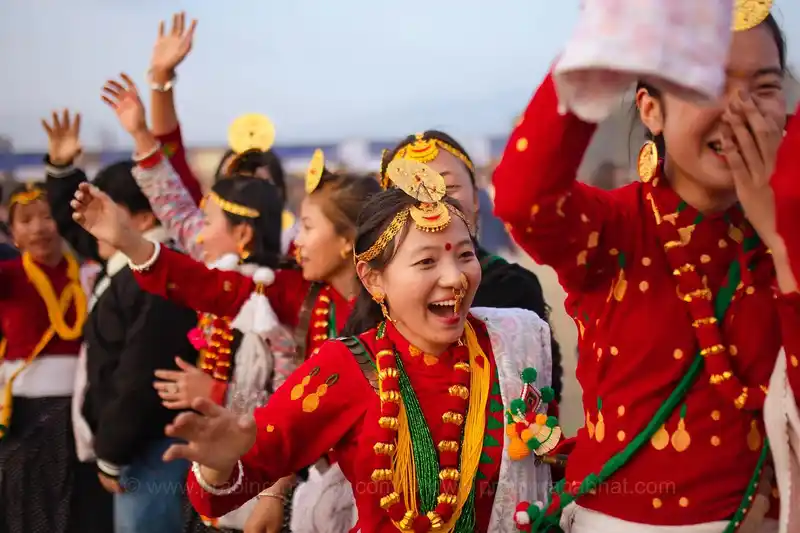
At Udhauli, many visitors first notice the harvest-season warmth of the gathering.
People come after the agricultural year has turned toward rest. There may be greetings, family meetings, food, district groups, elders sitting near the program, and young people moving toward the dhol and jhyamta.
The Sili steps can imitate harvesting, carrying, storing, weaving, animals, birds, and ordinary work.
The dance turns the year’s labor into public memory.
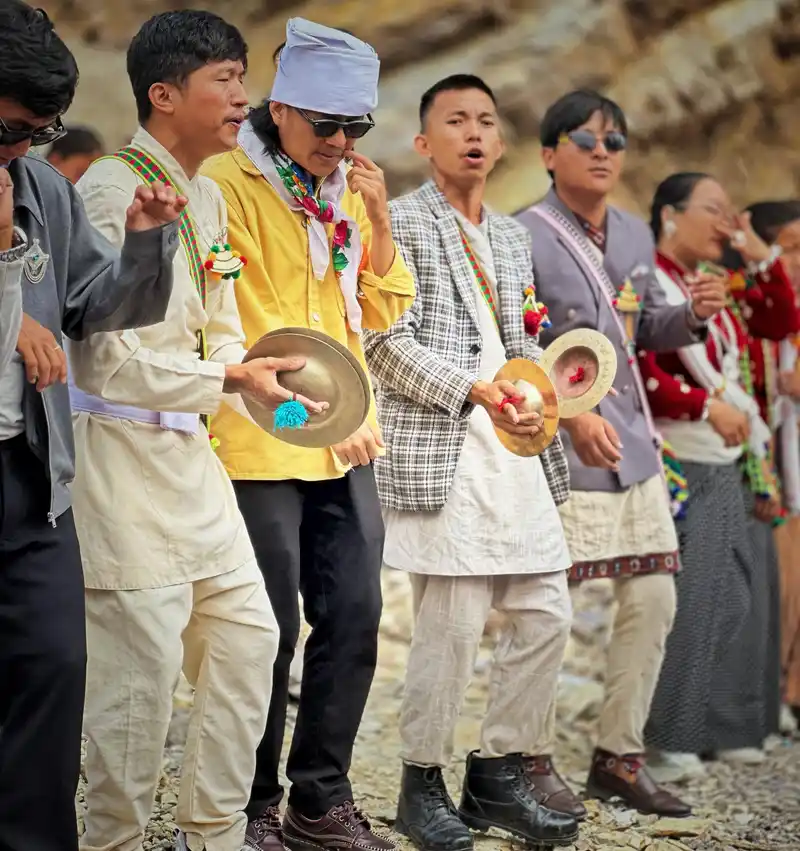
Traditional dress gives the harvest gathering a public face. Rai, Limbu, Sunuwar, Yakkha, and other Kirat communities may bring different clothing styles, ornaments, sashes, headwear, and identity markers into the same venue.
Food and social meetings carry more weight in Udhauli because the festival comes after harvest. Families meet relatives, young people find friends, elders sit near the program, and community organizations keep language, dress, song, and local memory visible.
At Budasubba, visitors may see prayers, bamboo-thread vows, families moving through the compound, and people adding the temple visit to a wider Dharan day.
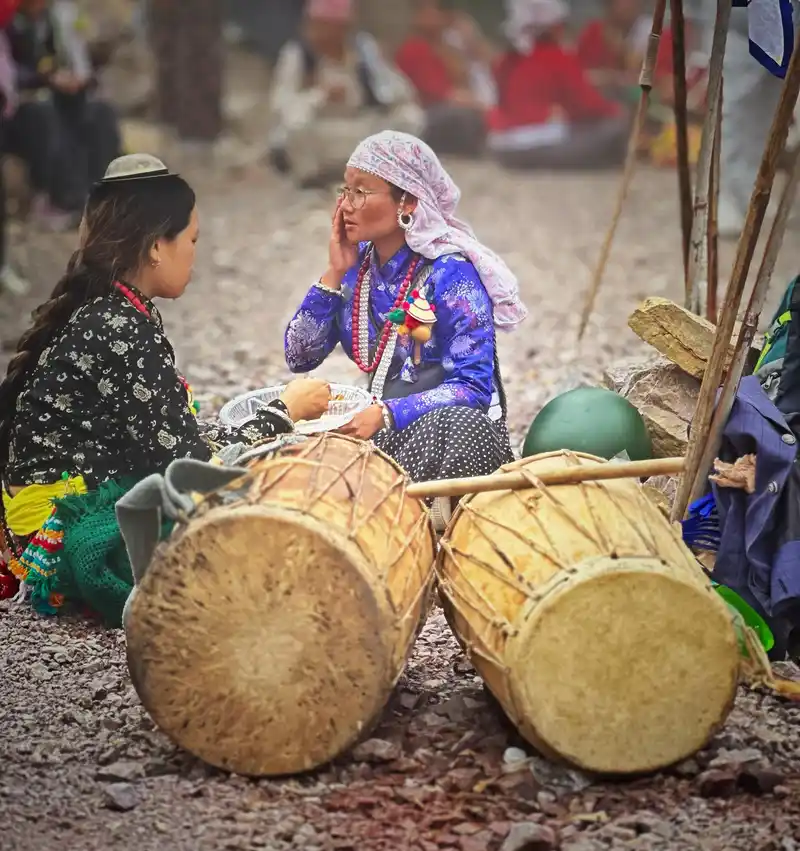
Sakela After Harvest
Sakela is the most visible cultural form of Udhauli, where the circle carries a harvest-thanks mood.
The dance usually has experienced leaders who hold the Sili pattern. Others follow their steps, and children often learn by standing near the edge before joining.
The circle can hold elders, youth, children, relatives, and visitors together. It is a public form, but it still carries family and ancestral memory.
Sili And The Memory Of Work
Sili is the language of the dance.
A Sili step can show harvesting, carrying grain, weaving, hunting, birds, animals, or ancestral stories.
In Udhauli, those movements fit the season because the agricultural year has reached its harvest side.
The dance may look festive, but the harvest memory stays inside it. People laugh, meet friends, and enjoy the music while the Sili keeps older meanings alive.
Winter Gathering In The City
In Kathmandu and other towns, Udhauli often becomes a winter reunion.
The drum keeps the circle grounded. The cymbals cut through the crowd. People drift toward the dance ground from food stalls, family groups, district association spaces, and the edge of the program.
For young Kirat people raised away from eastern villages, the public gathering can become a way to meet harvest culture through sound, dress, food, and elders.
Ancestors And Harvest
Udhauli is the harvest-thanks side of the Kirat year.
Families thank nature for crops and survival. They also remember ancestors, because land, language, ritual, and community life have been carried across generations.
The festival closes the year with gratitude: people to nature, children to elders, families to ancestors, and the community to the land.
If you want to experience Udhauli respectfully, check the current year’s Sakela or Kirat community notices near Mangsir Purnima.
Public gatherings may happen on the full moon day or on a nearby weekend.
In Kathmandu, watch for notices from Kirat Rai, Limbu, Sunuwar, Yakkha, and wider Kirat organizations.
In eastern Nepal, Dharan and Budasubba work well if you want a recognizable sacred place. To feel the harvest-season side, look for a local Sakela ground or community program as well.
If you visit Budasubba during the Udhauli season, give yourself time around Bijayapur. The temple is part of a wider Dharan sacred landscape, not just a single stop.
During Sakela or Sakewa dance, give the circle room to move.
Ask before filming close faces, ritual offerings, elders, or children, and follow gently if local dancers invite you in.
For village gatherings, plan through local contacts. Winter weather, short daylight, local transport, food arrangements, and return timing can be different from city programs.
What is Udhauli in Nepal?
Udhauli is a Kirat seasonal festival observed around Mangsir Purnima. It marks the downward and winter-season turn of the year and gives thanks after harvest.
Who celebrates Udhauli?
Udhauli is celebrated by Kirat communities, including Rai, Limbu, Sunuwar, Yakkha, and related groups. Each community has its own names, customs, stories, and local ways of observing the season.
Is Udhauli the same as Ubhauli?
No. Udhauli falls around Mangsir Purnima and marks the harvest and winter-season turn. Ubhauli falls around Baisakh Purnima and marks the farming-season turn.
What is Sakela Udhauli?
Sakela Udhauli is the Sakela or Sakewa dance and worship season connected with Udhauli. People dance in a circle with dhol and jhyamta, following Sili steps that show harvest, animals, birds, daily work, and ancestral stories.
Where can I see Udhauli in Kathmandu?
Look for current-year notices from Kirat community organizations. In Kathmandu, Udhauli gatherings may use open grounds, community venues, or event spaces depending on the organizing committee.
Is Budasubba connected with Udhauli?
Budasubba in Dharan is a major Kirat-linked sacred place and a natural dham connection for Udhauli. The festival itself is wider than Budasubba and is also celebrated at local Sakela grounds and community spaces.