
- Event Name
- Ubhauli Parva
- Duration
- 15 days
- Location
- Kathmandu, and eastern Nepal, Kirat communities, Dharan, Budasubba, Khotang, Bhojpur, Dhankuta, Kathmandu Kirat gatherings, Sakela grounds, and Kirat sacred places.
- Category
- Major Festival
- Tradition
- Ubhauli, Sakela Ubhauli, Sakewa, Sakenwa, Sili, Mundhum, Baisakh Purnima, nature worship, ancestor worship, farming year, dhol, jhyamta, Rai, Limbu, Sunuwar, Yakkha, Budasubba, Dharan



Ubhauli is a Kirat seasonal festival observed around Baisakh Purnima. It marks the upward turn of the year, when the warmer season begins and the farming cycle opens.
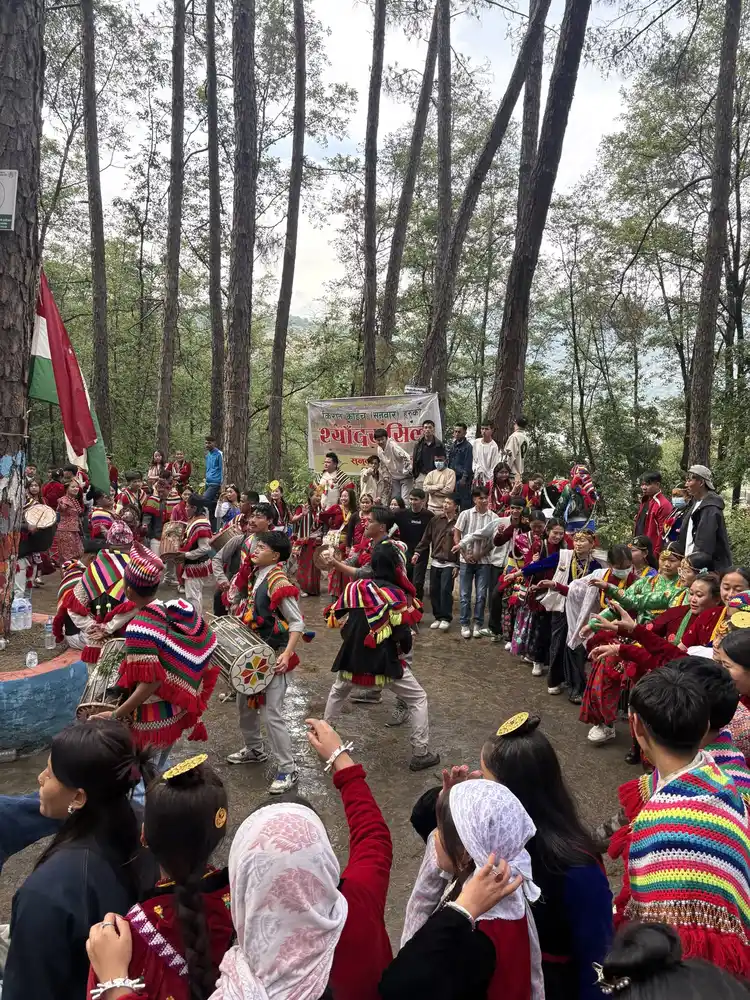
Many know Ubhauli through Sakela or Sakewa dance: a circle of dancers, dhol and jhyamta sounding together, elders leading the Sili steps, and younger people learning by following.
For Rai, Limbu, Sunuwar, Yakkha, and other Kirat families, Ubhauli is a time to honor nature and ancestors before the main agricultural work begins. People pray for healthy crops, good weather, protection from natural trouble, and family well-being.
In eastern Nepal, the festival belongs close to village land, hills, rivers, farms, and community dance grounds.
In Kathmandu, Kirat communities gather at public venues so the same seasonal rhythm can continue in city life.
Ubhauli is paired with Udhauli, but they are not the same event date. Ubhauli comes in Baisakh. Udhauli comes later in Mangsir, after harvest.
Ubhauli means the upward movement of the season.
It is linked with the time when people, birds, animals, and seasonal life move toward higher and cooler places as summer begins. In community memory, the upward turn also belongs to the start of cultivation.
The festival asks nature for a good year. Families remember the land that feeds them, the forests and rivers around them, and the ancestors who kept the community alive before them.
For Kirat communities, this relationship is not abstract. Farming, weather, food, health, language, ritual, and family memory all meet in the festival.
Ubhauli is observed in Baisakh Purnima, usually in April or May.
The exact English date changes each year, so use the current Nepali calendar for that year’s date.
The main worship begins around the full moon day. In many places, Sakela or Sakewa gatherings continue for several days, and some communities hold programs across a longer festival season.
Ubhauli begins the warm-season side of the Kirat sacred calendar.
For many Kirat families, Baisakh is the time when fields, weather, and household hopes all turn toward cultivation. The festival speaks to that moment: before the main farming work, people gather to ask nature for balance.
Among Rai communities, Sakela or Sakewa gives Ubhauli its most visible public form. The dance circle opens the season, and the Sili steps often lean toward planting, digging, sowing, birds, animals, and the beginning of work with land.
Different Rai groups may use names such as Sakela, Sakewa, Sakenwa, Toshi, or other local forms. The name changes by language and place, but the spring-season feeling remains close: people are asking for a good year ahead.
Limbu, Sunuwar, Yakkha, and other Kirat communities also carry their own seasonal practices.
Some families connect the season with Yuma-Theba sacred memory, household ancestors, local nature shrines, or community ritual spaces rather than a single shared temple.
What joins these practices is the opening of the agricultural year.
People honor the earth, sky, crops, rivers, forest, household, and ancestors before the season asks for labor, patience, and trust in weather.
Ubhauli draws its deeper meaning from Mundhum, the Kirat oral and ritual tradition.
In the Ubhauli season, Mundhum helps explain why the festival begins with nature. The year is about to ask people for work: planting, waiting for rain, watching the fields, and trusting the land again.
Rai traditions often remember Sumnima and Paruhang as ancestral and divine figures. In a farming-season festival, that pairing feels close to daily life: earth below, sky above, and human life held between them.
Sakela Sili keeps this mythology in motion.
In Ubhauli, the steps can lean toward digging, sowing, planting, clearing, birds returning, animals moving, and people preparing to work with land.
Some Kirat explanations also connect the seasonal turn with the movement of birds and animals toward higher, cooler places. The festival name itself carries that upward feeling.
Some Rai traditions remember Hetchhakuppa as an early performer of Sili. Other Sili forms carry the memory of Tayama-Khiyama, Sumnima-Paruhang, hunters, ancestors, animals, and village life. Around Limbu sacred memory, Yuma Sammang and Theba Sammang belong to the ancestral and divine world.
Ubhauli is more than a dance at the start of summer. It is a way of asking the living world to stay in balance before the farming year begins.
Ubhauli is strongest in eastern Nepal, where the festival still sits close to land, hill weather, family fields, and local Sakela grounds.
Khotang and Bhojpur are often named with Sakela memory, while Dharan, Dhankuta, Sankhuwasabha, Okhaldhunga, Udayapur, Ilam, Panchthar, Taplejung, Morang, Sunsari, and nearby areas all carry Kirat seasonal life in their own local ways.
In villages, the day may begin with offerings, elders, and preparation for the dance ground. The mood is not harvest-heavy yet. It is more like a public beginning: the year is open, the land is waiting, and people gather before the work deepens.
Dharan is visible because of Budasubba and the old Bijayapur sacred area. People may visit the temple, meet relatives, and then move toward community programs or local gatherings.
Kathmandu gives Ubhauli a migrant-city form. People from eastern districts meet at public grounds and community venues, often bringing children who may know the village only through family stories, food, dress, and the Sakela circle.
Budasubba in Dharan is the main dham linked with Ubhauli.
The temple sits in Bijayapur, an old sacred and historical area above Dharan. Its story includes Limbu and Kirat traditions, Buddhi Karna Raya Khebang Limbu, local stories of Budha Subba, bamboo without tufts, vows, and popular devotion.
During the Ubhauli season, Budasubba gives the festival a visible link with Kirat sacred geography before the farming year takes hold.
The temple visit may sit beside family meetings, district gatherings, and Sakela programs rather than replacing them.
For many families, the local Sakela ground has its own force. It may be a school ground, open field, community space, or village meeting place, but during Ubhauli it becomes where nature worship, elders, music, and the new season come together.
In Kathmandu, Kirat community venues become temporary sacred-cultural spaces. They carry offerings, elders, music, dance, food, and community belonging even when they are not temples in the usual sense.
At Ubhauli, the first thing many visitors notice is the way the gathering builds.
People arrive in family groups, meet relatives, adjust dress, greet elders, and slowly move toward the sound of dhol and jhyamta. The Sakela circle may start small before more people join.
The Sili steps often fit the season: digging, sowing, planting, clearing land, birds, animals, and the beginning of work. The dance makes the farming year visible before the fields fully take over daily life.
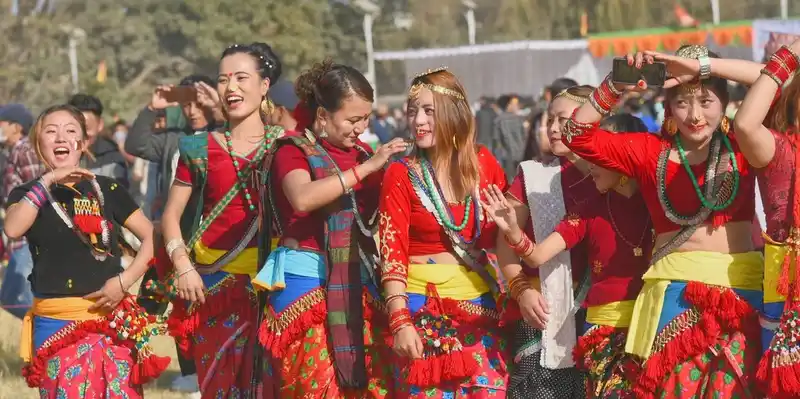
Traditional dress brings the gathering into public view.
Rai, Limbu, Sunuwar, Yakkha, and other Kirat communities may appear with different clothing styles, ornaments, sashes, headwear, and identity markers.
The day is social, but it carries more than entertainment.
Families come before the busy farming months, young people meet friends, elders watch the circle, and community organizations keep language, dress, song, and local memory visible.
At Budasubba, visitors may see worshippers offering prayers, tying threads around bamboo, visiting the temple compound, and moving through the wider Bijayapur area before or after community programs.
Sakela Or Sakewa Dance
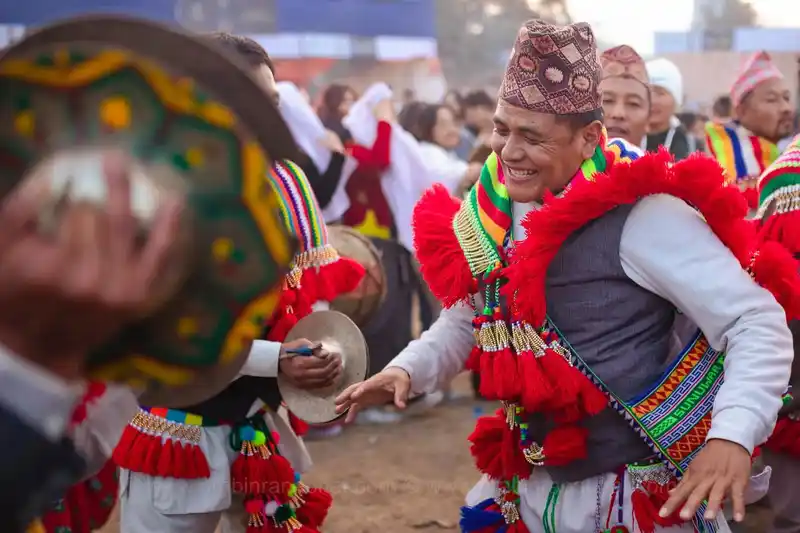
Sakela is the most visible cultural form of Ubhauli, but in this season it carries a beginning-of-year mood.
The dance usually grows around people who know the Sili well. They guide the pattern, and others follow until children, youth, and elders begin sharing the same circle.
The circle can grow slowly. Someone begins, others join, and the rhythm pulls the gathering into one shared movement.
Sili: Farming And Nature In Movement
Sili is the language of the dance.
A Sili step can show ploughing, digging, planting, weaving, hunting, birds, animals, or ancestral stories. In Ubhauli, these movements fit the season because the farming year is opening.
The dance can look cheerful from outside, but the steps carry older meanings.
People laugh and meet friends while the body remembers farming, nature, and ancestral stories.
Dhol, Jhyamta And The Start Of The Season
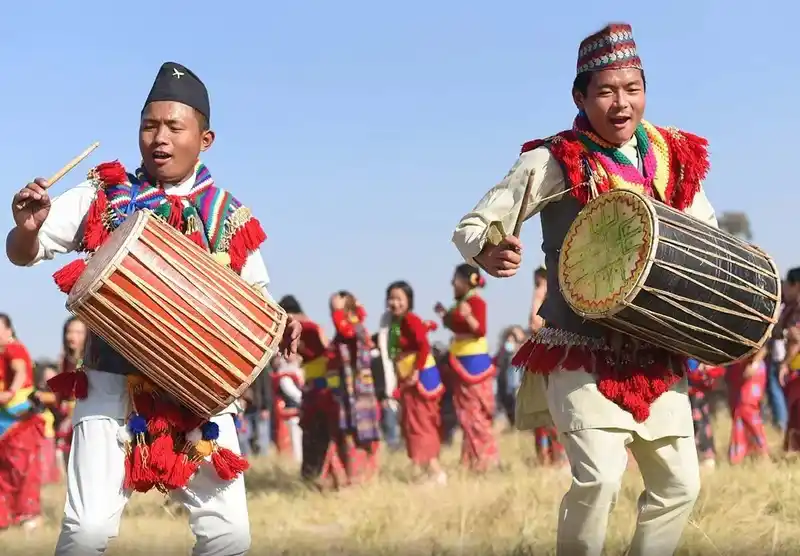
Dhol and jhyamta make Ubhauli recognizable from far away.
The drum gives the rhythm its body. The cymbals brighten it. As the sound spreads, the dance ground starts to pull people in.
In city gatherings, the sound helps young Kirat people meet the farming-season side of their culture even if they have grown up away from village fields.
Ancestors And The Farming Year
Ubhauli begins the farming-season side of the Kirat year.
Families ask nature for good crops and protection. They also remember ancestors, because land, language, ritual, and community life have been carried across generations.
The festival says the year begins with trust: people with nature, children with elders, families with ancestors, and the community with the land.
If you want to experience Ubhauli respectfully, check the current year’s Sakela or Kirat community notices near Baisakh Purnima. Public gatherings may happen on the full moon day or on a nearby weekend.
In Kathmandu, check notices from Kirat Rai, Limbu, Sunuwar, Yakkha, and wider Kirat organizations. The venue may shift from one year to another.
In eastern Nepal, Dharan and Budasubba work well if you want a recognizable sacred place.
To see Ubhauli as a community festival, look for the local Sakela ground as well.
If you visit Budasubba, leave time for Bijayapur instead of treating the temple as a quick stop. The wider area carries old sacred and local history around Dharan.
During Sakela or Sakewa dance, stand back from the circle at first and watch how people enter. Ask before filming close faces, ritual offerings, elders, or children, and follow local dancers if you are invited to join.
For village gatherings, plan through local contacts. Baisakh weather, road condition, food arrangements, program timing, and return transport can be different from city events.
What is Ubhauli in Nepal?
Ubhauli is a Kirat seasonal festival observed around Baisakh Purnima. It marks the upward and warmer-season turn of the year and the beginning of the farming cycle.
Who celebrates Ubhauli?
Ubhauli is celebrated by Kirat communities, including Rai, Limbu, Sunuwar, Yakkha, and related groups. Each community has its own names, customs, stories, and local ways of observing the season.
Is Ubhauli the same as Udhauli?
No. Ubhauli falls around Baisakh Purnima and marks the farming-season turn. Udhauli falls around Mangsir Purnima and marks the harvest and winter-season turn.
What is Sakela Ubhauli?
Sakela Ubhauli is the Sakela or Sakewa dance and worship season connected with Ubhauli. People dance in a circle with dhol and jhyamta, following Sili steps that show farming, animals, birds, daily work, and ancestral stories.
Where can I see Ubhauli in Kathmandu?
Check current-year notices from Kirat community organizations. In Kathmandu, public Sakela gatherings may be held at open grounds, community venues, or rented event spaces.
Is Budasubba connected with Ubhauli?
Budasubba in Dharan is a major Kirat-linked sacred place and a natural dham connection for Ubhauli. The festival itself is wider than Budasubba and is also celebrated at local Sakela grounds and community spaces.