
- Event Name
- Sonam Losar
- Duration
- 1 day
- Location
- Kathmandu Valley, and mostly Eastern Nepal, especially Tamang communities, Boudhanath, Swayambhunath, Tundikhel in Kathmandu, Kathmandu Valley gumbas, Tamang community monasteries, and districts with strong Tamang settlement.
- Category
- Major Festival
- Tradition
- Sonam Lhosar, Sonam Lhochhar, Tamang New Year, Tamang community, Hindu Tamang community celebration, Hyolmo community, Magh Shukla Pratipada, animal-year cycle, gumpa prayer, Boudhanath, Swayambhunath, Tundikhel, Tamang Selo, damphu, khapse, babar, traditional dress



Sonam Lhosar is the Tamang New Year. In Nepal, it is a main festival of the Tamang community and is also observed by Hyolmo communities in their own way.
The day brings together Buddhist prayer, family gathering, cultural dress, food, music, dance, and the feeling of stepping into a new animal year. Tamang families visit gumpas and stupas, clean homes, meet relatives, exchange greetings, and gather for cultural programs.
In Kathmandu, Boudhanath, Swayambhunath, and Tundikhel become natural gathering points.
In Tamang villages and districts, the day may feel more local: elders blessing younger family members, neighbors visiting each other, damphu beats, Tamang Selo, and food prepared for guests.
Sonam Lhosar has strong Mahayana Buddhist roots through lamas, gumpa visits, prayers, and the Himalayan New Year calendar. In Nepal today, it is also a wider Tamang cultural festival. Hindu Tamangs may not observe the day through Buddhist ritual in the same way, but many still celebrate it as a joyful community festival that honors shared Tamang language, history, place, dress, music, and heritage.
Sonam Lhosar is different from other Lhosar traditions. Tamu Lhosar belongs to Gurung communities. Gyalpo Lhosar belongs mainly to Sherpa and Tibetan Buddhist communities.
Sonam Lhosar is the Tamang New Year, with its own community, timing, music, and public feeling.
In the word Lhosar, lho means year and sar means new. Sonam Lhosar marks the beginning of a new year in the Tamang calendar.
Each year is linked with a lho, or animal-year sign. After twelve years, the animal cycle returns to the beginning and starts another round.
The animal year gives Sonam Lhosar its mythic calendar feeling. The festival is not only a date turning on paper; the lho itself changes. A family may speak of the old animal year leaving and the new animal year entering with its own mood, qualities, and hopes. The New Year greeting is therefore not only “happy new year.” It is also a welcome to the new lho.
In Tamang life, this cycle sits between Buddhist-Himalayan calendar tradition and community memory. Elders may remember the lho more naturally than a Gregorian year, and younger people often meet the animal cycle through festival greetings, posters, songs, stage programs, and family talk around Lhosar.
The festival also comes after the harvest season.
In older village life, that timing worked well because families had grain, food, and time to gather after the hardest work of the agricultural year.
Today, even in Kathmandu or abroad, Sonam Lhosar still carries that feeling of return: return to family, language, dress, music, gumpa, and Tamang identity.
That identity is not only religious. Tamang families may be Buddhist, Hindu, or shaped by a mix of local practice, but Sonam Lhosar gives many of them a shared New Year language. The festival says: this is our community, our elders, our songs, our food, our clothes, and our way of entering a new year.
Sonam Lhosar usually falls on Magh Shukla Pratipada, around January or February in the English calendar. The exact English date changes each year. People use the current Nepali calendar for that year’s observance.
Some celebrations happen on the main day, while community programs may take place before or after it, especially in Kathmandu, district headquarters, schools, community halls, and public grounds.
Public events can also shift depending on local committees, weather, venue availability, and government holiday announcements. The family and gumpa side remains closer to the festival date, while larger cultural programs may spread across several days.
For many Tamang Buddhists, Sonam Lhosar begins with prayer.
Families may visit a gumpa, offer lamps, receive blessings from lamas, and remember ancestors. The day asks people to enter the new year with a cleaner home, calmer mind, and stronger family ties.
The Buddhist side of the festival can include prayers for well-being, protection, peace, and the removal of obstacles.
In some places, masked dances or ritual programs are held to drive away negative forces and welcome a better year.
But Sonam Lhosar is not only a monastery day.
It is also a community identity day. Tamang language, dress, song, rhythm, food, and public presence all come forward. A young person who may spend the rest of the year in school, office, migration, or city life can meet the festival as a reminder of where the family comes from.
Sonam Lhosar is observed wherever Tamang communities live.
In Nepal, Tamang settlement is strong in the central hills and districts around Kathmandu Valley, including Kavre, Sindhupalchok, Nuwakot, Rasuwa, Dhading, Makwanpur, Dolakha, Ramechhap, Sindhuli, and parts of Lalitpur, Kathmandu, and Bhaktapur.
Kathmandu becomes highly visible because many Tamang families live, study, and work there.
Boudhanath, Swayambhunath, local gumpas, community halls, Tundikhel, and public cultural venues may all become part of the celebration.
Boudhanath carries a strong Buddhist atmosphere for Sonam Lhosar. People visit the stupa, make kora, light lamps, meet friends, wear traditional dress, and gather around the Boudha area before or after formal programs.
Swayambhunath also draws devotees and visitors. For Tamang Buddhists in Kathmandu Valley, a visit to Swayambhu can combine stupa worship, family movement, photos in traditional dress, and a sense of taking the New Year blessing from an old Buddhist site.
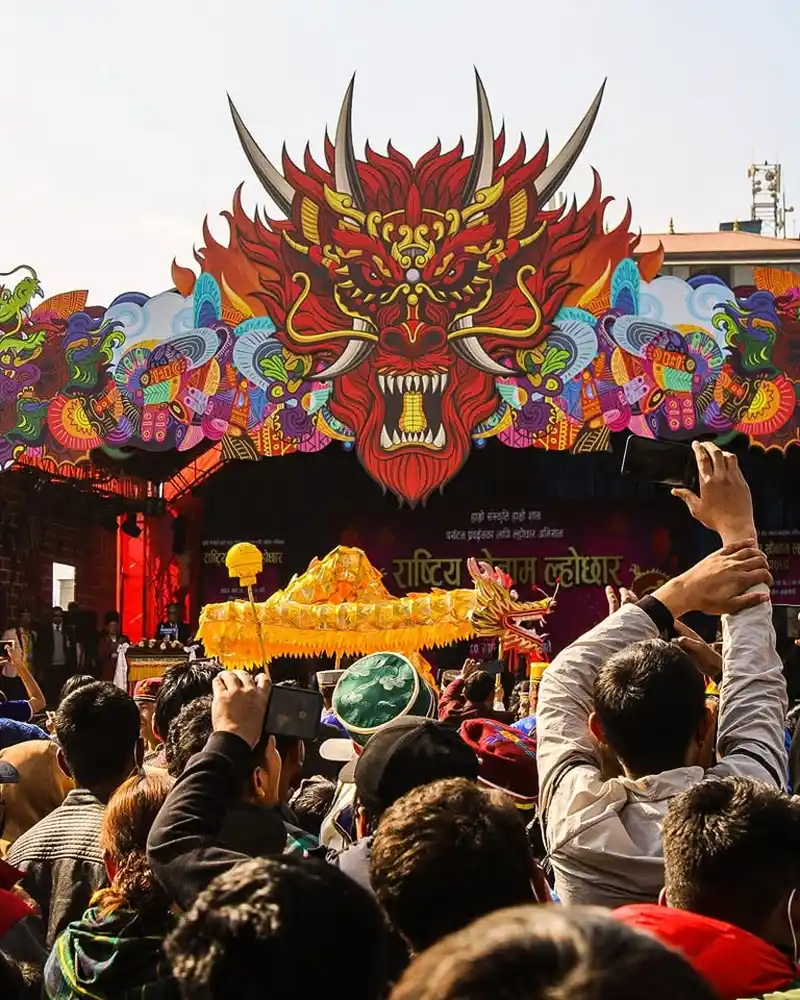
Tundikhel gives Sonam Lhosar its most public Kathmandu face. Cultural programs, food stalls, Tamang Selo performances, damphu beats, dances, speeches, community organization stalls, and people in traditional dress can turn the open ground into a vivid Tamang gathering space.
Outside Kathmandu, the festival can feel more intimate and more rooted in village life.
A gumpa courtyard, a school ground, a hill settlement, or a local community stage may become the center of the day.
Boudhanath is a main public Buddhist place connected with Sonam Lhosar in Kathmandu. The stupa is not a Tamang-only site, but it naturally gathers Buddhist communities during Lhosar seasons. On Sonam Lhosar, the area can carry both prayer and celebration.
Swayambhunath is another major Buddhist site where Tamang families and other devotees may go for blessings, kora, lamps, and photos with relatives. The hilltop setting gives the day a wider Kathmandu Valley feeling.
Tamang community gumpas can be just as meaningful as the famous stupas. Many families go to the local monastery first because that is where they know the lama, the community, and the rhythm of the year. The nearest Tamang gumpa may feel more personal than a crowded landmark.
Tundikhel and other public cultural venues in Kathmandu may also host Sonam Lhosar programs. These are not dhams, but they are part of how the festival becomes visible in the capital: speeches, songs, dances, food stalls, flags, traditional dress, and community organizations all sharing one space.
For someone outside the Tamang community, this public setting can be easier to approach than a family gathering or local gumpa. You can watch the stage program, try food, listen to Tamang Selo, and see the community dress and dance while still remembering that Sonam Lhosar belongs first to Tamang people.
At Boudhanath or Swayambhunath, the day may begin with kora, lamps, and quiet prayer, then slowly turn into a more social gathering. You may see families in traditional Tamang dress, young people taking photos, elders sitting together, and groups moving between the stupa and nearby food places.
At a gumpa, the feeling can be more devotional. People may sit through prayers, receive blessings, offer lamps, bring food, and meet relatives after the ritual.
The sound is usually different from a Hindu temple festival: mantras, drums, horns, cymbals, and lama-led prayers rather than bells and aarti.
At cultural programs, Sonam Lhosar becomes colorful and loud. Tamang Selo songs, damphu beats, dance groups, traditional jewelry, speeches, flags, and greetings fill the space. The damphu carries Tamang musical identity, not just background rhythm.
At Tundikhel, the festival can feel like a public homecoming. People come to watch dance groups, eat at food stalls, meet relatives and district friends, listen to speeches, take photos in Tamang dress, and move between stage programs and community stalls. The open ground makes the celebration visible even to people who are only passing through central Kathmandu.
Food also makes the festival feel like New Year.
Families may prepare khapse, babar, sel roti, meat dishes, local drinks, tea, and other foods depending on household and region. The exact table changes, but the purpose stays close: feeding guests, respecting elders, and welcoming the new year properly.
Tamang Dress And Public Identity
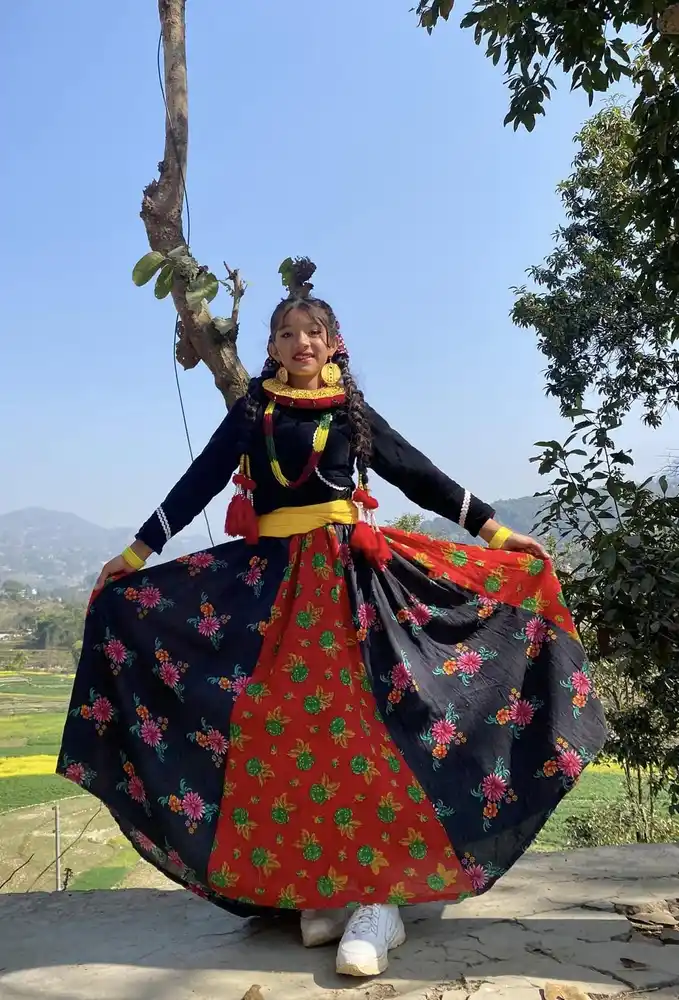
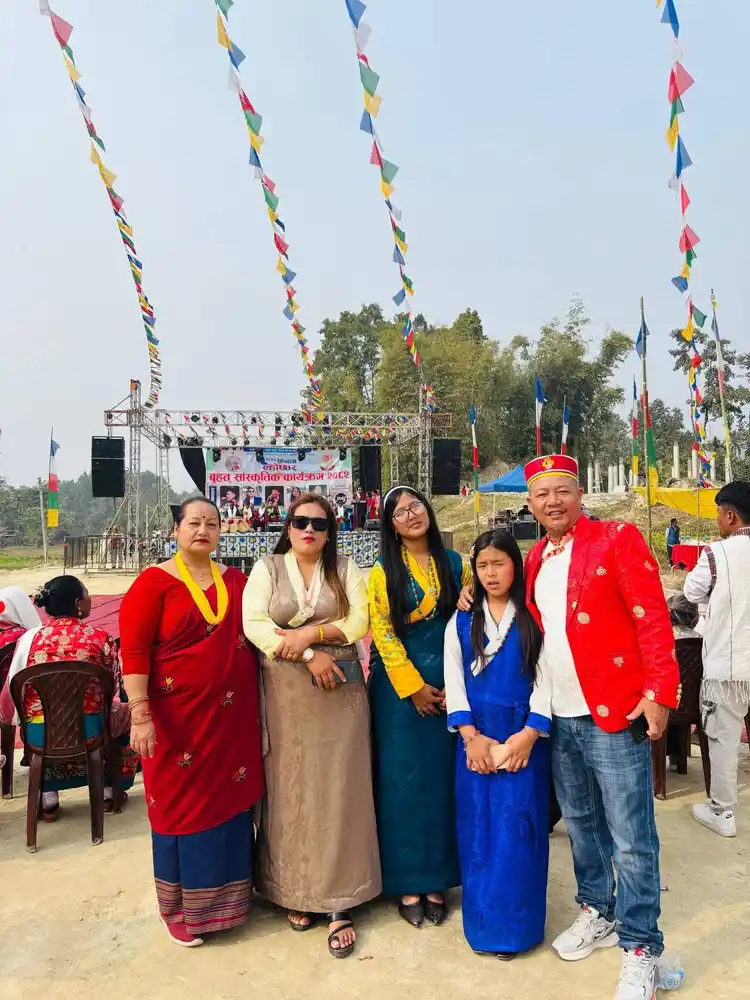
Sonam Lhosar is a time when Tamang dress becomes highly visible. Women may wear traditional ornaments, colorful clothing, and community dress styles. Men may also wear Tamang dress or formal clothes depending on family and program.
In the city, clothing becomes a way of saying, “This is our New Year.” It is especially powerful for younger Tamang people who may not wear traditional dress in daily life.
Tamang Selo And Damphu
Tamang Selo is a clear sound of Sonam Lhosar.
Some songs are joyful and fast; others carry longing, humor, love, memory, or village stories. The damphu gives the rhythm its Tamang body.
The damphu is more than a musical prop. In Tamang culture, it is tied to story, song, celebration, and ritual life. During Lhosar, when the damphu starts and people begin to dance, the festival moves from formal greeting into shared community energy.
Food, Guests And New Year Blessings
Food carries the household side of Sonam Lhosar. Some families prepare khapse, babar, sel roti, meat, tea, local drinks, and snacks for guests. Others keep the meal simpler, especially in city homes where time and space are limited.
The heart of the day is visiting. Relatives come, elders are greeted, children receive attention, and the house feels open. A person may go to a gumpa in the morning, attend a cultural program in the afternoon, and still return home to eat with family in the evening.
The Lho Animal-Year Cycle
The lho cycle gives Sonam Lhosar its New Year imagination. Each year arrives under an animal sign, and the festival marks the change from the old lho to the new one.
The Tamang lho cycle has twelve animals: Rat, Ox, Tiger, Rabbit, Dragon, Snake, Horse, Sheep or Goat, Monkey, Rooster or Bird, Dog, and Boar.
The cycle resets after twelve years, so the animal sign returns again in the same order. A Rat year comes again after the Boar year, and the same lho begins another round. This is why public banners and greetings often announce the new lho by animal name.
People may not explain this in formal religious language. It may appear through greetings, community banners, children’s curiosity about the new animal, elders talking about the year’s nature, or songs and stage programs that announce the new lho.
The cycle makes time feel alive: the year has a name, a character, and a place inside family conversation.
For Tamang families, the animal-year change also helps connect the household festival with a larger Himalayan calendar. A home meal, a gumpa visit, a public program, and a new-year greeting all belong to the same turning of time.
A Shared Tamang Festival Beyond One Religious Practice
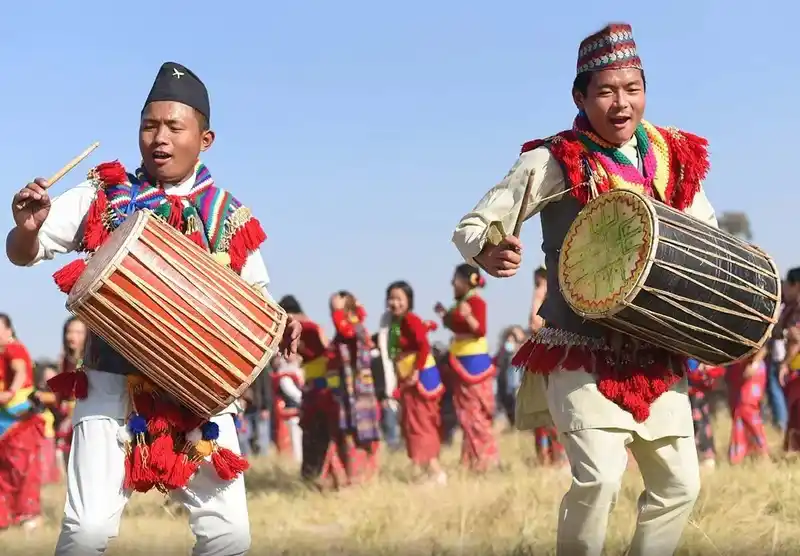
Sonam Lhosar comes from Mahayana Buddhist-Himalayan New Year traditions, and lamas, gumpas, prayers, and stupas still carry the devotional side of the day.
At the same time, Tamang life in Nepal is not only one religious lane. Hindu Tamangs also share Tamang language, history, geography, kinship, songs, dress, and community memory. For them, Sonam Lhosar may be less about monastery ritual and more about joining the wider Tamang New Year: meeting relatives, attending cultural programs, wearing community dress, eating together, and honoring heritage.
That is why the festival can hold both devotion and identity. A Buddhist family may begin at the gumpa. A Hindu Tamang family may come first through Tundikhel, relatives, music, and community celebration. Both can still be part of the same Tamang New Year.
Not The Same As Tamu Or Gyalpo Lhosar
Nepal has several Lhosar traditions, and each has its own community identity. Sonam Lhosar is the Tamang New Year. Tamu Lhosar belongs to Gurung communities. Gyalpo Lhosar belongs mainly to Sherpa and Tibetan Buddhist communities.
They share the idea of New Year, Buddhist-Himalayan calendar life, and community gathering, but each one has its own people, timing, food, dress, songs, and public feeling.
If you want to understand Sonam Lhosar respectfully, start with the Tamang frame. This is not just a Buddhist-site visit or a photo day at Boudha. It is a New Year festival for a specific community.
Boudhanath and Swayambhunath are good places to see the public Buddhist side of the day, especially if you are already in Kathmandu. Go earlier for calmer kora and prayer. Later in the day, the area may become more social and crowded.
Tundikhel is the place to look for the large Kathmandu cultural face of Sonam Lhosar. Expect stage programs, Tamang Selo, dance, food stalls, community groups, speeches, crowds, and many people in traditional dress. Check the current year’s venue notice because public programs can shift by committee decision and city arrangements.
If you are not from the Tamang community, Tundikhel is usually a more natural place to observe respectfully than a private home event. Public programs help visitors see the culture, while family and religious spaces remain more personal.
For other community programs, check current-year notices from Tamang associations, local municipalities, gumpas, and social media pages. Venues and program dates can change, especially in Kathmandu.
If you attend a cultural program, give space to families and community groups. Ask before taking close photos of elders, children, lamas, or performers.
Enjoy the music and food, but remember that the festival belongs first to the Tamang community.
For village or district celebrations, plan around road conditions, winter weather, local transport, and return timing. In hill districts, late-night travel after a community program may not be easy.
What is Sonam Lhosar in Nepal?
Sonam Lhosar is the Tamang New Year in Nepal. It is observed through family gatherings, gumpa prayers, Boudhanath and Swayambhunath visits, traditional dress, Tamang Selo, damphu, food, and community programs.
When is Sonam Lhosar?
Sonam Lhosar usually falls around Magh Shukla Pratipada, in January or February. The exact English date changes each year, so use the current Nepali calendar for that year’s date.
Is Sonam Lhosar only for Tamang people?
Sonam Lhosar is mainly the Tamang New Year, and Hyolmo communities also observe it in their own way. Other Nepali communities may attend public programs or visit Buddhist sites, but the festival identity is Tamang.
Do Hindu Tamangs celebrate Sonam Lhosar?
Yes. Sonam Lhosar has Buddhist roots, especially through lamas, gumpas, prayers, and the New Year calendar, but many Hindu Tamangs also celebrate it as a Tamang cultural and ethnic festival. For them, the day may center more on family, heritage, music, dress, food, and public community programs.
Is Sonam Lhosar the same as Tamu Lhosar or Gyalpo Lhosar?
No. Sonam Lhosar belongs to Tamang communities. Tamu Lhosar belongs to Gurung communities, and Gyalpo Lhosar belongs mainly to Sherpa and Tibetan Buddhist communities. The names sound similar because they are all New Year festivals, but they are not the same event.
Where can I go for Sonam Lhosar in Kathmandu?
Boudhanath, Swayambhunath, Tamang community gumpas, Tundikhel, and public cultural programs are common places to experience Sonam Lhosar in Kathmandu. Check current-year community notices for exact venues and times.
What do people eat on Sonam Lhosar?
Food varies by family and region. Many families prepare festival foods such as khapse, babar, sel roti, meat dishes, tea, local drinks, and snacks for guests.
What music is connected with Sonam Lhosar?
Tamang Selo and damphu are strongly connected with Sonam Lhosar. Tamang Selo carries stories, humor, longing, love, and celebration, while the damphu gives the music its distinct rhythm.