
- Event Name
- Bisket Jatra In Nagadesh - Siddhi Ganesh Jatra
- Duration
- 1 day
- Location
- Bhaktapur, Nagadesh, Centered in Nagadesh, an old Newar settlement in Madhyapur Thimi. The jatra follows local Siddhi Ganesh worship and the settlement's own route, with a sacred relationship to Balkumari in Thimi and the nearby Nil Barahi tradition of Tigani.
- Category
- Kathmandu Valley Jatra
- Tradition
- Nagadesh Biska Jatra, Shree Siddhi Ganesh Rath Jatra, Siddhi Ganesh Aju Dyo, local deity khat, sindoor, dhimay music, Nagadesh Newar jatra, Balkumari relationship, Nagdesh Sanchwa, Siddhi Ganesh and Nil Barahi meeting, New Year worship



Bisket Jatra In Nagadesh – Siddhi Ganesh Jatra in Photo Gallery
In Nagadesh, Bhaktapur, Siddhi Ganesh is celebrated as Aju Dyo, the ancestral guardian deity of the settlement. The Nagadesh community jatra joins the main Bhaktapur jatra at Thimi.
Bisket Jatra in Nagadesh is the New Year jatra of Shree Siddhi Ganesh, the Aju Dyo of Nagadesh. This is a part of wider Bhaktapur Biska Jatra.
Nagadesh is an old Newar settlement in Madhyapur Thimi, with farming roots, local temples, Nagadesh Buddha Bihar, and a strong calendar of community festivals. During the Biska season, the settlement gathers around Siddhi Ganesh Rath Jatra, sindoor, music, deity movement, and local worship.
This is not Thimi’s Sindoor Jatra repeated in another place.
Nagadesh has its own deity, its own story, and its own route.
The local center is Siddhi Ganesh, remembered in tradition as the son of Balkumari and protector of Nagadesh.
From that center, Nagadesh finds its place in the wider Biska family. Bhaktapur explains the old royal-city Biska. Thimi gathers the larger Madhyapur Sindoor Jatra. Bode carries the tongue-piercing vow. Tigani brings Nil Barahi from its own local route. Nagadesh stands with Siddhi Ganesh.
If you come looking for the biggest crowd, you may miss why people gather around Siddhi Ganesh with such attachment.
Nagadesh Biska is about a guardian deity who belongs to the settlement.
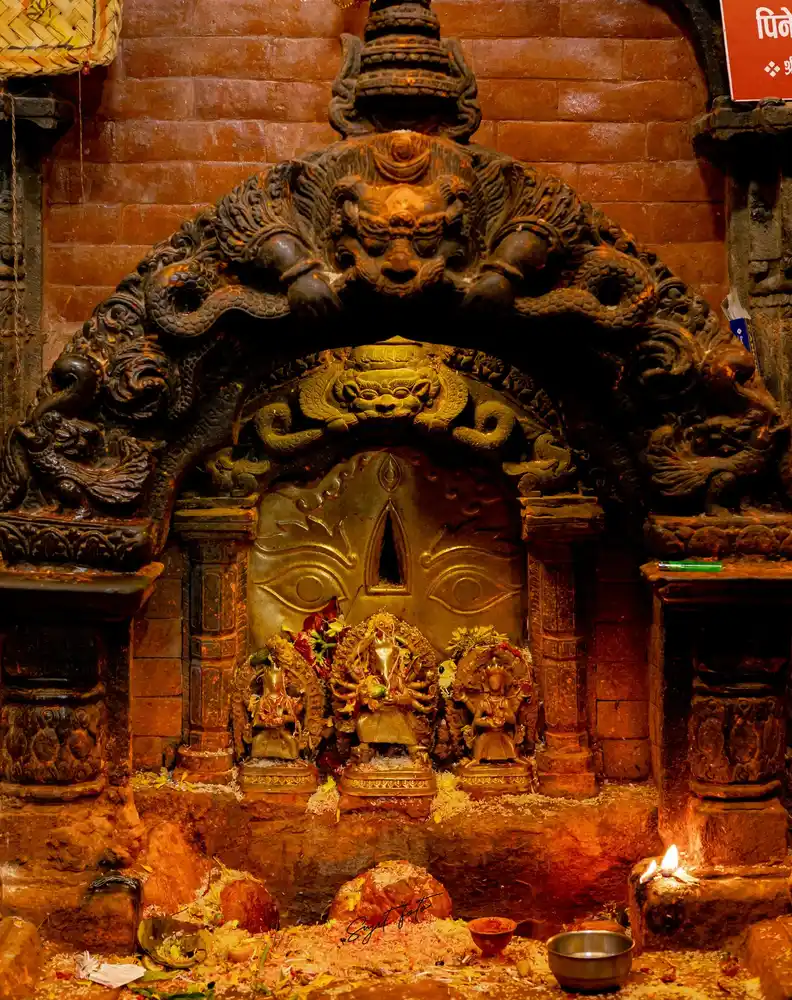
Nagadesh Bisket Jatra marks the New Year through Siddhi Ganesh.
Ganesh worship already carries the meaning of auspicious beginning, obstacle removal, and protection. In Nagadesh, that meaning becomes local through Siddhi Ganesh as Aju Dyo, the ancestral guardian deity of the settlement.
Because Siddhi Ganesh is the Aju Dyo of Nagadesh, the New Year does not begin as a general festival mood. It begins through the deity who protects the place.
During the jatra, people carry deity khats, play music, offer worship, and mark the season with sindoor and community gathering. The street becomes a route of darshan, and the settlement begins the year under the presence of its own deity.
Nagadesh also sits within the larger Biska family of Bhaktapur and Madhyapur.
Bhaktapur has Bhairavnath and Lyo Sin Dyo. Thimi has Balkumari and Sindoor Jatra. Bode has the tongue-piercing vow. Tigani brings Nil Barahi. And, Nagadesh has Siddhi Ganesh and its own Newar settlement devotion.
The jatra also renews an old promise of safety.
The Siddhi Ganesh story brings protection close to the settlement itself: people live in fear, turn to Balkumari, receive Siddhi Ganesh, and ask him to remain with them.
For Nagadesh families, the khat, sindoor, music, and route carry a personal devotion.
Siddhi Ganesh moves as the Aju Dyo of the place, not as a general festival symbol.
Nagadesh Bisket Jatra happens during the Biska season around Nepali New Year, near the end of Chaitra and start of Baisakh. The main event usually happens on 2nd of Baisakh.
The procession route, and timing can shift with the local schedule. Nagadesh community notices, Madhyapur Thimi updates, and local news usually announce timing.
Because Nagadesh sits within the wider Madhyapur Thimi Biska season, its events may fall close to Thimi, Bode, and other nearby Biska processions.
Nagadesh keeps a strong Siddhi Ganesh story.
Local tradition says a demon once troubled Nagadesh. The demon came whenever he wished and killed people for food. The people tried to manage the danger by promising food every day, but the demon demanded a person as his meal.
The people then prayed to Goddess Balkumari.
Balkumari sent Siddhi Ganesh, remembered as her eldest son, to protect the settlement. Siddhi Ganesh killed the demon.
After the demon fell, the story turns from rescue to belonging.
When Siddhi Ganesh prepared to return, the people of Nagadesh asked him to stay and protect them. Since then, Nagadesh has worshipped Siddhi Ganesh as its Aju Dyo.
That is the religious force behind the jatra. Siddhi Ganesh is Ganesh as Nagadesh’s own protector, the deity who stayed because the people asked him to remain with them.
The story keeps Nagadesh Biska deeper than color and procession. Sindoor is visible. Music is heard from a distance. Underneath that public sound is a guardian story: the people pray to Balkumari, Siddhi Ganesh comes, the demon falls, and the deity stays with Nagadesh.
For families of the settlement, this makes the New Year feel like a renewal of protection.
A new year begins after the community remembers the deity who removed danger from their own ground.
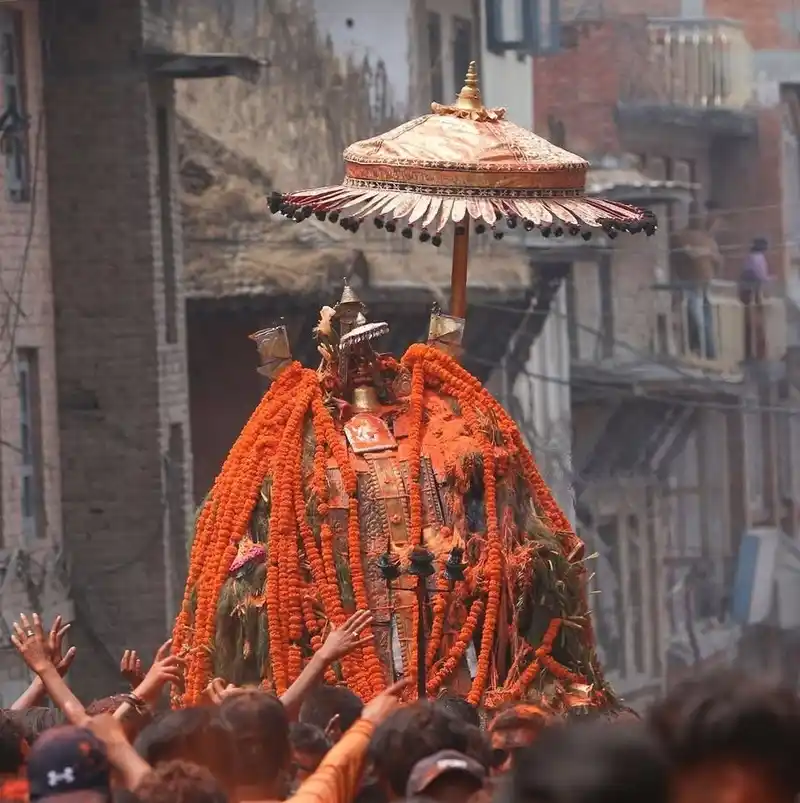
Siddhi Ganesh also ties Nagadesh to Balkumari of Thimi.
In Madhyapur tradition, Balkumari is the guardian goddess of Thimi, while Siddhi Ganesh stands as her son and the protector of Nagadesh. Through that bond, Nagadesh Biska belongs to the wider Thimi-Madhyapur sacred world while still keeping its own local identity.
That is why, the Bisket Jatra procession would only begin after Siddhi Ganesh’s chariot reaches the Balkumari premises. Through that movement, Nagadesh greets the Thimi-side goddess tradition while Siddhi Ganesh remains at the center of its own jatra.
For Nagadesh families, Siddhi Ganesh carries protection, beginning, and belonging. And, the jatra renews that bond each New Year.
Another Madhyapur-side relationship appears at Nagdesh Sanchwa.
During Biska, Tigani’s Nil Barahi procession reaches this area, where Nil Barahi awaits Siddhi Ganesh. That meeting belongs especially to the Tigani and Nagadesh side of the wider Biska web.
Even there, Nagadesh keeps Siddhi Ganesh at its center.
Nil Barahi’s arrival marks a sacred meeting between neighboring traditions and shows how old settlements recognize one another through their deities.
Shree Siddhi Ganesh Rath Jatra
Shree Siddhi Ganesh Rath Jatra is the main Nagadesh Biska form.
The deity comes into movement through the chariot or khat, and the settlement gathers for darshan, music, sindoor, and New Year worship. The procession carries Siddhi Ganesh through Nagadesh as the community receives the deity outside the temple.
The devotional shape is simple and direct: the protector deity leaves the shrine and moves among the people.
The chariot or khat makes the protector visible in the lanes.
A temple deity whom families worship through the year comes out into the shared space of the settlement. Children, elders, musicians, guthi members, and neighbors meet along the route, not as an audience outside the ritual but as the people of Siddhi Ganesh.
That is the heart of a settlement jatra.
The route carries weight through familiarity: the same lanes, houses, courtyards, and deity bonds returning each New Year.
Khat, Music And Sindoor
Nagadesh Biska uses the familiar Newar jatra language of khat, music, and color.
People gather around deity carriers, musicians play traditional instruments, and sindoor appears as an auspicious New Year sign.
Nagadesh is quieter than Thimi’s large Sindoor Jatra, but the color and music still place it inside the Biska season.
Houses, lanes, courtyards, temple areas, and familiar neighborhood points become part of the worship.
Sindoor in Nagadesh works through blessing and New Year joy. It marks the season with auspiciousness and lets the settlement visibly join the wider Madhyapur Biska atmosphere without losing its Siddhi Ganesh center.
Music does a similar job.
Dhimay and other local sounds announce that Siddhi Ganesh is moving.
The sound, procession, and gathered families tell people that the jatra has entered their part of town.
Meeting with Balkumari
When the chariot reaches ritually to Balkumari’s side, the festival expresses the older bond between Nagadesh and Thimi’s goddess tradition. The moment carries the recognition between deities and settlements inside Madhyapur’s sacred order.
This relationship is one reason Nagadesh belongs naturally beside Thimi in the Biska season.
Balkumari holds the main Thimi-side goddess presence, and Siddhi Ganesh carries Nagadesh’s guardian role as her son in local tradition.
When people speak of Madhyapur Biska, these deity bonds matter as much as procession size.
The festival is not a single crowd spreading from one point. It is a set of sacred ties moving through old settlements.
Nagdesh Sanchwa And Nil Barahi
Nagdesh Sanchwa gives Nagadesh another place inside the Madhyapur Biska network.
In Tigani’s Baisakh 2 Nhiisiya or Mu Jatra, Nil Barahi’s khat reaches Nagdesh Sanchwa, where the goddess awaits Siddhi Ganesh. The meeting remembers the relationship between Nil Barahi and Siddhi Ganesh and brings two neighboring sacred traditions into the same New Year movement.
For Nagadesh, this meeting deepens the Siddhi Ganesh story.
The deity guards Nagadesh lanes and also stands beside nearby Biska deities, especially Nil Barahi from Tigani and Balkumari from Thimi.
Each settlement keeps its own center, while the deities meet and recognize one another across boundaries.
New Year Worship
Like other Biska forms, Nagadesh Bisket Jatra welcomes the New Year.
Families pray for a safe year, protection from harm, good health, and continuity of the settlement’s traditions. The New Year begins with Ganesh, the deity who removes obstacles and guards beginnings.
Because Siddhi Ganesh is a Ganesh form, the New Year meaning comes naturally here.
Ganesh worship opens auspicious work, removes obstacles, and blesses beginnings. Nagadesh carries that wider Ganesh devotion through its own Aju Dyo.
The jatra speaks to both the household and the settlement. Families ask for a good year. The community renews its bond with the deity who protects the place.
Siddhi Ganesh Temple in Nagadesh is the main dham for this jatra because the festival centers on Siddhi Ganesh as Aju Dyo.
Nagadesh Buddha Bihar belongs to the local sacred landscape and shows Nagadesh as a historic Newar settlement with Hindu and Buddhist presence.
Balkumari Temple in Thimi connects to the tradition that remembers Siddhi Ganesh as Balkumari’s son.
Nagdesh Sanchwa carries the Madhyapur-side relationship between Siddhi Ganesh and Tigani’s Nil Barahi procession.
The local Nagadesh lanes matter too.
This jatra is not held only inside temple walls. It gains its shape as Siddhi Ganesh moves through the settlement and people receive the deity in familiar civic and family spaces.
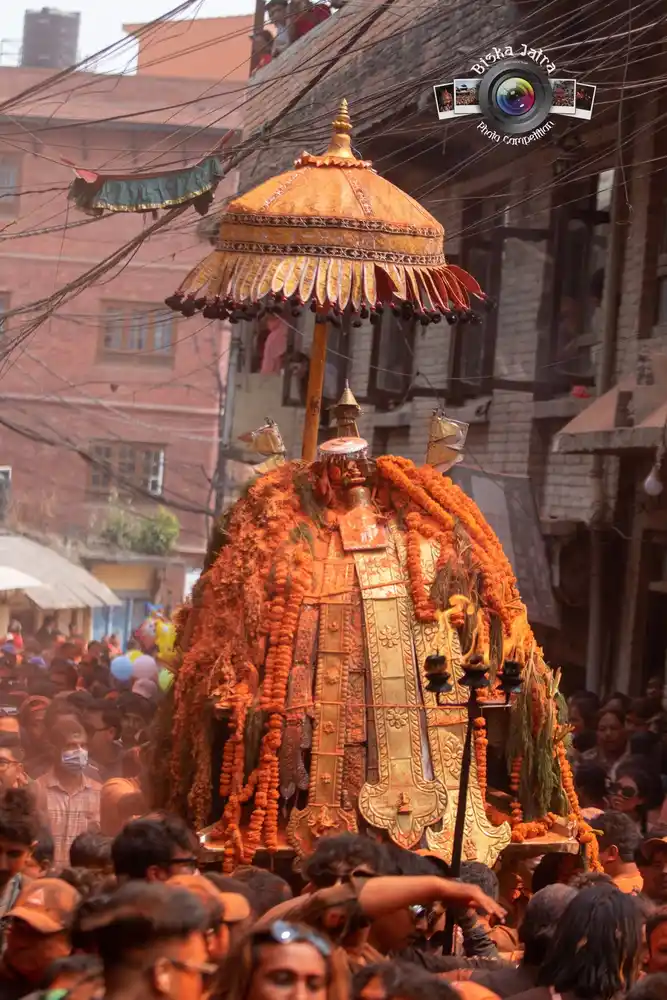
Visitors usually see a quieter settlement Biska than Bhaktapur or Thimi.
Nagadesh offers a settlement jatra centered on Siddhi Ganesh, local khats, sindoor, music, and neighborhood devotion.
People gather along the route, make offerings, follow the deity movement, and greet the New Year through their own local god.
Nagadesh Biska carries the religious life of one settlement through Ganesh worship, protection memory, and New Year devotion.
If you have already seen Thimi, Nagadesh is more intimate.
The route is quieter, but the devotion remains strong. The jatra draws attention to who the deity is, why Siddhi Ganesh belongs to Nagadesh, and how the settlement receives him.
You may also hear people speak of nearby Bode, Tigani, Balkumari, or other Madhyapur processions in the same season. Nagadesh belongs to that wider sacred geography, but its own doorway into Biska is Siddhi Ganesh.
Use the current Nepali calendar and Nagadesh local notices for that year’s date.
Because Nagadesh events may happen close to Thimi, Bode, and other Madhyapur Biska processions, check the place-specific timing before you go.
Arrive early and ask local residents where the Siddhi Ganesh route will pass. In smaller jatras, local guidance works better than visitor signage.
Keep space for deity carriers, musicians, elders, and families offering worship. Ask before taking close photographs of khats, priests, children, or private offerings.
Nagadesh is a local settlement jatra. The best visit is quiet, respectful, and guided by people who know the route.
What is Bisket Jatra in Nagadesh?
Bisket Jatra in Nagadesh is the local Newar New Year jatra centered on Shree Siddhi Ganesh, the Aju Dyo of Nagadesh, with chariot or khat movement, sindoor, music, and community worship.
Is Nagadesh Bisket Jatra the same as Thimi Sindoor Jatra?
No. Nagadesh belongs to the same Biska season, but it centers on Siddhi Ganesh and the local Nagadesh route. Thimi centers on Balkumari and the larger Sindoor Jatra.
How is Nagadesh connected with Tigani?
During Tigani’s Baisakh 2 Nhiisiya or Mu Jatra, Nil Barahi’s khat reaches Nagdesh Sanchwa, where the goddess awaits Siddhi Ganesh. This meeting shows a local relationship between Tigani’s Nil Barahi tradition and Nagadesh’s Siddhi Ganesh devotion.
Who is Siddhi Ganesh in Nagadesh?
Nagadesh worships Siddhi Ganesh as its Aju Dyo. Local tradition remembers him as the son of Balkumari who protected Nagadesh from a demon and stayed as the settlement’s guardian deity.
When does Nagadesh Bisket Jatra happen?
It happens during the Biska season around Nepali New Year, near the end of Chaitra and start of Baisakh. Look at Nagadesh local notices for that year’s date.
Where can visitors go in Nagadesh?
Siddhi Ganesh Temple and the local procession route are the main places. Nagadesh Buddha Bihar and the old settlement lanes also show the local sacred landscape.