
- Event Name
- Bisket Jatra In Bode - Chanesiya Jatra
- Duration
- 3 days
- Location
- Bode, Kathmandu Valley, Centered in Bode, an old Newar settlement in Madhyapur Thimi, especially around Bode Layaku Durbar, Mahalaxmi Temple, Pancho Ganesh, and the route taken by the tongue-piercing vow participant.
- Category
- Kathmandu Valley Jatra
- Tradition
- Bisket Jatra, Bode Biska, Jibro Chhedne Jatra, Mepwakhanegu Jatra, tongue-piercing vow, Nilbarahi legend, khyak folklore, Pasta Guthi, Pasta Thayegu, Kshama Puja, Naayo Pama, Karmi Naike, Nakarmi, Mahadwip, Naaykhin Baja, needle removal, Bode Layaku dabu
Bisket Jatra In Bode - Chanesiya Jatra Day-by-Day Schedule for 2026 (2082-2083 BS)
| Day | Date | Ritual / Event | Highlights & Notes |
|---|---|---|---|
Day 1 | Monday | April 13, 2026 Krishna Ekadashi | Chaitra 30, 2082 BS | Purification And Nilbarahi Wood | The participant prepares through purification, bathing, food discipline, and worship connected with wood from the Nilbarahi forest. The ritual team blesses the participant before the public vow. |
Day 2 | Tuesday | April 14, 2026 Krishna Dwadashi | Vaishakha 1, 2083 BS | Pasta Thayegu At Mahalaxmi | Pasta Guthi performs apology worship at Mahalaxmi Temple, keeping the tongue-piercing vow inside reverence toward Nilbarahi and the local deity tradition. |
Day 3 | Wednesday | April 15, 2026 Krishna Trayodashi | Vaishakha 2, 2083 BS | Jibro Chhedne Jatra And Mahadwip Procession | The participant visits local temples, receives the tongue piercing at the dabu, carries the Mahadwip lamps through Bode, and completes the vow with needle removal near Mahalaxmi and Pancho Ganesh. |



Bisket Jatra In Bode, Bhaktapur – Chanesiya Jatra in Photo Gallery
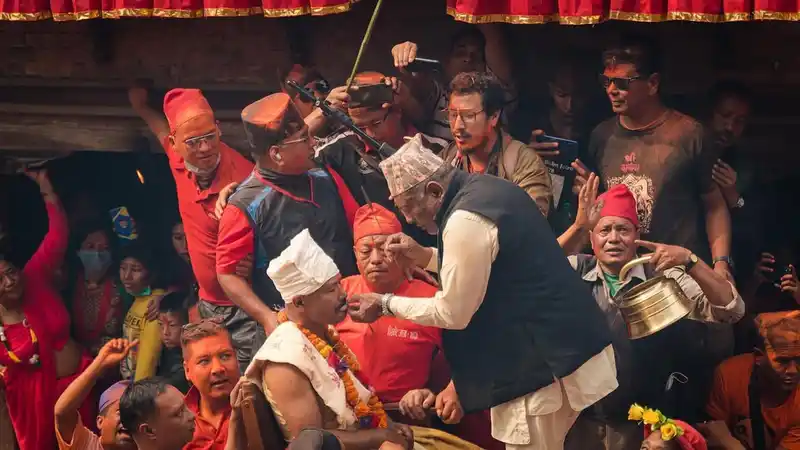
A local man carries the vow for the community. The pierced tongue, the Mahadwip lamps, the route, the music, and the removal of the needle all belong to a sacred sequence.
Bisket Jatra in Bode centers on Jibro Chhedne Jatra, the tongue-piercing vow performed during the New Year season.
This is Bode’s own Biska form. Bhaktapur has Bhairavnath’s chariot. Thimi has Sindoor Jatra. Bode has a vow carried through the body of one local participant, who receives a tongue piercing and walks through the settlement with Mahadwip lamps.
In Nepal Bhasa, the jatra is also known as Mepwakhanegu Jatra.
That name keeps the ritual close to Bode’s own language. The piercing is the visible act; the vow, route, deities, guthi duties, and promise of protection carry the meaning.
That meaning begins before anyone sees the needle.
The jatra grows out of an old story of danger, Nilbarahi, a khyak, and a promise that Bode would remain protected if the vow continued each year.
The festival usually takes place around Baisakh 2, after preparation and worship on the final day of Chaitra and Baisakh 1.
Those earlier days prepare the vow before anyone gathers at the dabu. Bode’s Newar community, Nilbarahi legend, Mahalaxmi worship, Pancho Ganesh, Pasta Guthi, and the old route around the settlement all come into the sequence before the public piercing.
For visitors, the piercing may be the first thing they see.
For Bode, the deeper center is protection: protection from illness, hunger, disaster, harmful weather, and forces that disturb the settlement.
Bode also sits inside the wider Madhyapur Biska relationship.
Thimi gathers the big Sindoor Jatra energy around Balkumari and many khats. Bode brings a different force into the same season: one person’s discipline on behalf of the community.
The man who carries the vow is never standing alone as a performer. He stands inside a chain of deities, guthi duties, family discipline, inherited roles, and old promises made for the safety of Bode.
Bode’s Bisket Jatra is a vow for the community.
The selected participant accepts a vow that Bode has long associated with the settlement’s protection. The pierced tongue, the Mahadwip lamps, the route, the music, and the removal of the needle all belong to a sacred sequence.
Bode’s old name, Bu De, is often understood through flat land and farming settlement.
The legend and the vow speak to the safety of a real community: fields, homes, people, health, rainfall, drought, and survival.
That farming memory makes the protection promise feel close to daily life. A vow against disease, famine, excessive rain, drought, earthquake, and fear is not abstract when a settlement depends on land, weather, family health, and social peace.
During the jatra, the settlement gathers around that old promise.
Families watch, musicians move, guthi members carry duties, and the participant walks with discipline through the route.
Bode’s Biska stands apart from Thimi and Bhaktapur. It has its own ritual center. Instead of a huge chariot or clouds of sindoor, Bode carries Biska through the vow itself. The participant becomes the moving center of the jatra.
The vow also has a strong human side. The participant prepares his body, controls his food, follows purification, receives blessings, accepts pain without turning the ritual into display, and completes the route in front of the same community he is praying to protect.
That discipline is why Bode’s jatra carries both awe and tenderness.
Bode’s tongue-piercing jatra usually takes place on Baisakh 2, during the Bisket Jatra season around Nepali New Year.
The preparation begins earlier.
On the final day of Chaitra, the participant goes through purification and the Naayo Pama performs worship with wood from the Nilbarahi forest. On Baisakh 1, Pasta Guthi performs apology worship at Mahalaxmi Temple. On Baisakh 2, the piercing and procession take place.
The sequence moves from preparation to apology to public vow.
First the participant prepares his body. Then the community returns to Mahalaxmi and Nilbarahi with reverence. Only after that does the piercing become public.
Bode families usually follow local notices, Madhyapur Thimi updates, community announcements, and annual news for the date and procession timing.
Bode’s story begins with Nilbarahi and a troubled settlement.
Locals says the older settlement stood near the Nilbarahi forest and was once called Shankhakot. Nilbarahi’s ghostly attendants, often remembered as bhut, pichas, and khyak, first helped people with farming work. Later, they began troubling the locals.
The people moved from the old settlement, but the disturbances continued.
The people turned to Bhimdatta Karmacharya, a tantric healer from the Devpatan side. He came to Bode, set tantric protections, and stopped one khyak at the western gate.
The captured khyak was said to be a gatekeeper of Nilbarahi.
In the legend, people cut his hair, tore his clothes, pierced his long tongue, tied bells to his legs, made him carry fiery lamps, and paraded him through the settlement.
The story is severe, but the jatra treats it with reverence rather than simple punishment. The khyak belongs to Nilbarahi’s world, and the later rituals keep returning to the goddess with apology, worship, and respect.
The khyak then made a promise. He would not return to harm Bode. He would come for the tongue-piercing vow at the same season. He would protect the settlement from disease, hunger, excessive rain, drought, earthquake, and other suffering.
The jatra continues that promise in human form.
A local man carries the vow so Bode may remain protected.
Many tellings remember this as a broad protection promise.
The vow asks that Bode be safe from disease, famine, drought, untimely rain, earthquake, fear, and other harm that can unsettle a farming town. This brings the story down to everyday life: land, rain, health, social peace, and the worries a settlement carried from one year into the next.
The ritual sequence shows the story.
Purification prepares the participant. Pasta Thayegu restores humility before Nilbarahi. The temple visits place the vow under local deities. The piercing, Mahadwip procession, and needle removal then carry the old promise through the body, route, and sacred places of Bode.
Purification And Nilbarahi Wood
The preparation begins before the piercing day.
The participant purifies himself, trims nails, shaves, bathes, and eats self-cooked food.
The Naayo Pama, the town head, performs worship with wood brought from the Nilbarahi forest. People light a bonfire called gunshi choyekegu near the participant’s house.
The Karmi Naike, the ritual piercer, places tika from the bonfire ash and blesses the participant with courage and endurance.
This preparation makes the piercing day less sudden.
By the time the participant reaches the dabu, he has already entered the vow through bathing, food discipline, worship, ash, music, and the presence of the people who carry the old roles.
Pasta Thayegu At Mahalaxmi
On Baisakh 1, Pasta Guthi performs Pasta Thayegu, an apology worship, at Mahalaxmi Temple.
This worship takes the jatra back to Nilbarahi’s anger in the legend. After people captured and punished the khyak, the story says Nilbarahi became displeased. The apology worship keeps the vow inside reverence.
The Pasta Guthi has its own inherited role in the festival.
Their worship and music prepare the religious ground before the piercing day.
Pasta Thayegu keeps humility inside the jatra.
The ritual remembers Nilbarahi’s displeasure and brings the community back to the goddess with apology, music, and offerings before the vow continues.
After this apology, the jatra can move toward the public act.
Bode Biska Jatra does not simply retell the khyak story; it returns to the goddess whose presence stands behind that story.
Temple Tour Before Piercing
On Baisakh 2, the participant first visits temples around Bode with musicians.
The procession moves with Naaykhin Baja and worship at different sacred places. This temple visit places the participant under the protection and witness of the local deities before he reaches the piercing stage.
The route leads toward the dabu, the raised stage near the rear of Bode Layaku Durbar and close to Pancho Ganesh.
The temple tour also makes the vow public before the piercing.
The participant moves from shrine to shrine, and the settlement sees that he is entering the act through worship rather than personal bravery alone.
By the time he reaches the dabu, the route has already joined body, deity, and settlement. The piercing happens in public, but the vow has been moving through Bode before that moment.
The Iron Needle
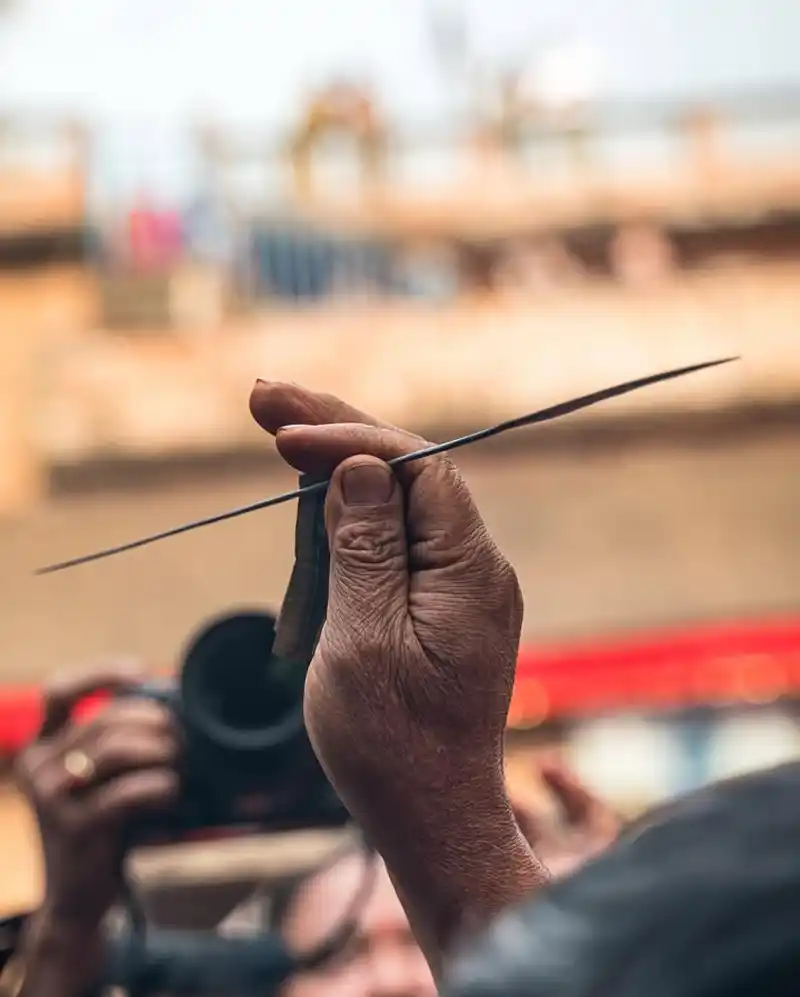
The Nakarmi brings the iron needle for the ritual.
The needle is often said to be roughly ten inches long and kept in oil for a month before the jatra. The oil prepares the needle for the piercing.
At the dabu, the Karmi Naike receives the needle and pierces the participant’s tongue in front of the gathered community.
Several locals meet at this moment for their role.
The Nakarmi brings the needle. The Karmi Naike performs the piercing. The Naayo Pama and guthi members hold the older civic and ritual duties around the act. Musicians and families gather around them. The participant carries the visible pain, but the whole town carries the vow with him.
Mahadwip Procession
After the piercing, the participant carries the Mahadwip.
The Mahadwip changes the meaning of this procession. The participant is carrying light through the settlement after taking the vow onto his own body. In that moment, Bode’s Biska becomes both bodily discipline and public blessing.
Mahadwip is a semicircular lamp form tied with bamboo and set with twelve lamps.
The participant carries it while walking through Bode, turning the vow into a moving procession through the settlement.
This procession is the heart of Bode’s Bisket Jatra.
The pierced tongue, the lamps, the music, and the route all carry the old promise of protection.
The route lets the vow leave the dabu and pass through the town.
People witness the piercing, then see the promise move through Bode with light, music, and discipline.
Mahalaxmi, Pancho Ganesh And Needle Removal
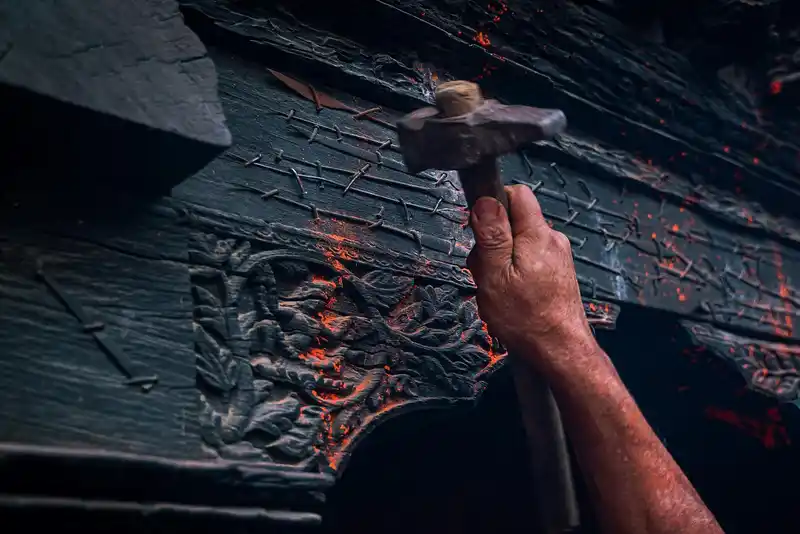
The procession ends with the removal of the needle.
Local tradition places this moment at Mahalaxmi Temple, in the presence of Pancho Ganesh’s chariot. After the needle comes out, people apply mud from Mahalaxmi Temple to the tongue.
The needle then goes to the participant’s house and later to the Nityanath area near Mahalaxmi. It is finally hammered into wood at the Ganesh temple. This closes the ritual and returns the vow from the body into the sacred place.
The removal carries as much weight as the piercing. The vow continues after the crowd has seen the needle. It closes through temple presence, earth from Mahalaxmi, the movement of the needle, and its final placement into wood.
Bode returns the ritual from the participant’s body back into the sacred geography of the settlement.
That closing movement keeps the jatra sacred after the most visible moment has passed. The needle leaves the body, touches home and sacred places, and settles into wood. The vow returns to Bode’s religious geography until the next year’s cycle calls it forward again.
Bode Layaku Durbar anchors the piercing because the dabu stands near the old palace area and Pancho Ganesh.
Mahalaxmi Temple carries the apology worship, the needle-removal moment, and the mud applied after the piercing.
Pancho Ganesh is present during the removal of the needle and gives the closing sequence a strong Ganesh connection.
The Nityanath area near Mahalaxmi appears in the final movement of the needle after it leaves the participant’s tongue.
Nilbarahi forest and Nilbarahi tradition give the legend its spiritual beginning, even when the main procession happens inside Bode.
Thimi, Nagadesh, and Tigani show the wider Madhyapur Biska world around Bode. Thimi carries the collective Sindoor Jatra, Nagadesh honors Siddhi Ganesh, and Tigani brings Nil Barahi devotion from its own local setting. Bode remains distinct because its main sacred act is the tongue-piercing vow.
The Bode route also keeps the jatra close to the town’s old civic spaces.
Bode Layaku Durbar, the dabu, Mahalaxmi, Pancho Ganesh, Nityanath, and the local lanes all become part of the vow. The participant’s body is central, but the route makes the whole settlement part of the act.
Yatris usually see a serious crowd before they see the piercing.
Musicians move through the settlement. Local people gather along the route. The participant arrives with ritual support, receives the piercing, carries the Mahadwip, and walks through Bode with the lamps.
The sight is intense. The tongue piercing, the iron needle, the lamps, and the crowd draw attention quickly. Still, the participant carries a religious duty for the community.
The procession may look quieter than Thimi’s Sindoor Jatra and less physically chaotic than Bhaktapur’s chariot pulling, but it carries concentrated devotion.
Bode remembers Biska through endurance, protection, and discipline.
Bode’s power comes from that concentration. The town can carry a complete Biska through one vow, one route, one participant, and the deities who receive him.
Quiet respect surrounds the most intense moments.
People come close, cameras appear, and the crowd grows, but the heart of the jatra remains solemn. Bode is watching one person carry a promise that belongs to everyone.
Seen from myth to apology, piercing, Mahadwip, and needle removal, the jatra becomes a full protection vow.
Bode renews that vow through a ritual path the community still recognizes.
The Nepali calendar and Bode’s local announcements carry the date and procession timing for that year.
Baisakh 2 is usually the main tongue-piercing day, but preparation and related worship begin earlier.
Arrive early if you want to watch from a respectful distance. The area around the dabu, Mahalaxmi Temple, and the procession route can become crowded.
Keep space for the participant, Karmi Naike, Naayo Pama, Nakarmi, guthi members, musicians, and local families.
Ask before taking close photographs of the participant, the piercing, the needle-removal moment, or private worship. Bode keeps the jatra sacred even when many visitors come to watch.
What is Bisket Jatra in Bode?
Bisket Jatra in Bode is a Newar New Year observance centered on Jibro Chhedne Jatra, the tongue-piercing vow performed for the protection and wellbeing of the community.
When does Bode tongue-piercing happen?
The tongue-piercing procession usually takes place on Baisakh 2, after preparation on the final day of Chaitra and worship on Baisakh 1. Local notices carry the annual date and timing.
What is Jibro Chhedne Jatra?
Jibro Chhedne Jatra means the tongue-piercing jatra. In Bode, a selected local participant receives an iron needle through the tongue, carries Mahadwip lamps, and walks through the settlement as part of a protection vow.
Who pierces the tongue?
The Karmi Naike performs the piercing. The Nakarmi brings the iron needle, and the Naayo Pama, Pasta Guthi, musicians, and other local ritual groups carry their own duties in the festival sequence.
Why does the participant carry Mahadwip lamps?
The Mahadwip turns the vow into a moving blessing. After the tongue is pierced, the participant carries the semicircular lamp form through Bode, bringing light into the route while carrying the old protection promise on his body.
Why is Pasta Thayegu performed?
Pasta Thayegu is apology worship at Mahalaxmi Temple. It remembers Nilbarahi’s displeasure in the legend and keeps the tongue-piercing vow inside reverence rather than treating it as punishment or display.
What is Mahadwip?
Mahadwip is a semicircular lamp form tied with bamboo and set with twelve lamps. The participant carries it after the tongue piercing while moving through Bode.
Which places matter during Bode Bisket Jatra?
Bode Layaku Durbar, Mahalaxmi Temple, Pancho Ganesh, the Nityanath area, and the local procession route all carry the jatra.
How is Bode connected with Thimi Bisket Jatra?
Bode belongs to the wider Madhyapur Biska season, but it has its own ritual center. Thimi is known for Sindoor Jatra and many deity khats, while Bode brings Jibro Chhedne Jatra, the tongue-piercing vow, Mahadwip lamps, and the Nilbarahi-khyak protection story.
Is Bode Bisket Jatra safe to watch?
Visitors can watch, but the area can become crowded and emotionally intense. Keep distance from the ritual team, leave the route open, and ask before taking close photos.