
- Event Name
- Maghe Sankranti | Makar Sankranti
- Duration
- 1 day
- Location
- Devghat, Gulmi, Sunsari, all over Nepal, especially homes, river sangams, Ruru Kshetra/Ridi, Devghat, Baraha Kshetra, Panauti Triveni, Sankhamul, and local bathing ghats.
- Category
- Major Festival
- Tradition
- Maghe Sankranti, Makar Sankranti, Maghi, Ghyah Chaku Sanlhu, holy bath, river sangam, til ko laddoo, ghee chaku, tarul, yam, khichadi, Ridi Mela, Devghat Mela, Baraha Kshetra snan, Surya, Vishnu, ancestors



Maghe Sankranti, or Makar Sankranti, is observed on the first day of Magh, when the sun enters Makar rashi and the coldest stretch of winter begins to turn toward longer, warmer days. In Nepal, the day is both religious and deeply cultural.
Families eat ghee, chaku, til ko laddoo, tarul, yam, sweet potato, and other warming foods.
Many people take a holy bath at river confluences before sunrise or early in the morning. At major sangams, the day becomes a mela, with pilgrims, sadhus, vendors, family groups, and local committees filling the riverbanks.
The same date carries different names and feelings across Nepal.
Many hill and city families call it Maghe Sankranti. Newar families know it as Ghyah Chaku Sanlhu. Tharu communities celebrate Maghi, a major new-year festival. Magar communities also treat Maghe Sankranti as a central annual festival, with family gatherings and respect for chelibeti, the daughters and women of the family.
Maghe Sankranti is not only a food festival. It is also a major river-bathing and sangam pilgrimage day, especially at Ruru Kshetra, Devghat, Baraha Kshetra, Panauti, and other sacred water sites.
Maghe Sankranti marks the sun’s movement into Makar rashi.
In Hindu calendar language, it is connected with Uttarayan, the northward movement of the sun. The day is considered auspicious for bathing, worship, charity, and beginning a cleaner seasonal rhythm after the deep cold of Poush.
That seasonal turn is easy to feel in the food. Ghee, chaku, sesame, molasses, yam, sweet potato, and khichadi are not random festival items. They are winter foods: heavy, warm, oily, sweet, earthy, and filling. A family plate on Makar Sankranti usually tells you exactly what time of year it is.
The day also carries a strong river meaning. People go to the water before the day becomes busy. They bathe, offer prayers, remember ancestors, and give daan where the custom is followed.
At a river confluence, the ritual feels larger because two rivers meet, pilgrims gather, and the whole place turns into a temporary sacred town for the morning.
Maghe Sankranti falls on the first day of Magh in the Nepali calendar. It usually comes in mid-January.
Unlike many lunar festivals, Sankranti follows the solar movement, so its timing is more stable than festivals such as Dashain, Tihar, or Janai Purnima. The exact English date may vary by a few days.
Some melas (carnivals) begin before the main day or continue after it.
Ridi Mela at Ruru Kshetra is especially known for a multi-day festival around Maghe Sankranti, with the days locally remembered as Jethi Sankranti, Maili Sankranti, and Kanchhi Sankranti.
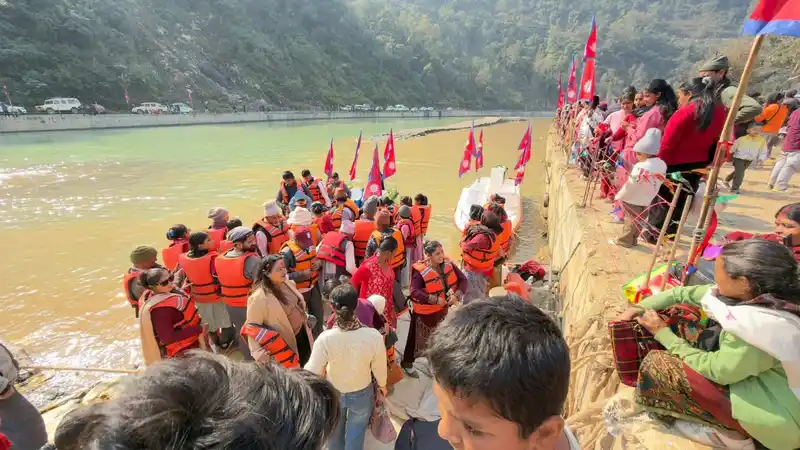
The main religious act of Makar Sankranti is snan, the holy bath. Pilgrims bathe at rivers, ponds, or sangams, then worship, offer flowers, light incense, give daan, and visit nearby temples.
Surya stands at the center of the date because Sankranti marks the sun’s transition.
Vishnu also comes forward at several Nepali pilgrimage sites.
Ruru Kshetra is tied to Rishikesh Narayan and the Kali Gandaki, where Shaligram stones are found. Baraha Kshetra belongs to Vishnu’s Varaha avatar. Devghat carries its own sacred weight through the meeting of the Trishuli and Kali Gandaki/Narayani river system.
The mythological feeling of the day often comes through Uttarayan. In the Mahabharata, Bhishma waits for Uttarayan before leaving his body, which is why many devotees think of this period as spiritually auspicious.
In Nepal, that idea meets local river geography: the sun turns north, winter begins to loosen, and people go to cold water before returning home for warm festival food.
Maghe Sankranti is observed across Nepal, but the day changes shape by region and community.
In many hill and city homes, the morning begins with bathing and worship, followed by ghee-chaku, til ko laddoo, tarul, yam, sweet potato, khichadi, and family blessings. Children remember the day through the food first. Elders often remember it through both food and snan.
In Kathmandu Valley, Newar families observe Ghyah Chaku Sanlhu with ghee, chaku, sesame sweets, and winter foods. Sankhamul and other river sites may receive bathers, while Panauti becomes especially busy in Makar Mela years.
In the Terai, Madhesh, and Tharu areas, the day is also Maghi. For Tharu communities, Maghi is a major new-year festival, not just a one-morning ritual. Families gather, eat festive food, visit relatives, sing, dance, settle community decisions in some places, and begin the year together.
Among Magar communities, Maghe Sankranti is also a major cultural festival. The day brings family invitations, respect for daughters and female relatives, food, dance, gathering, and the feeling of turning from one seasonal phase into another.
At river pilgrimage sites, Maghe Sankranti becomes more public.
Ruru, Devghat, Baraha Kshetra, Panauti, Dolalghat, Sankhamul, and many local sangams receive people who come for snan and worship.
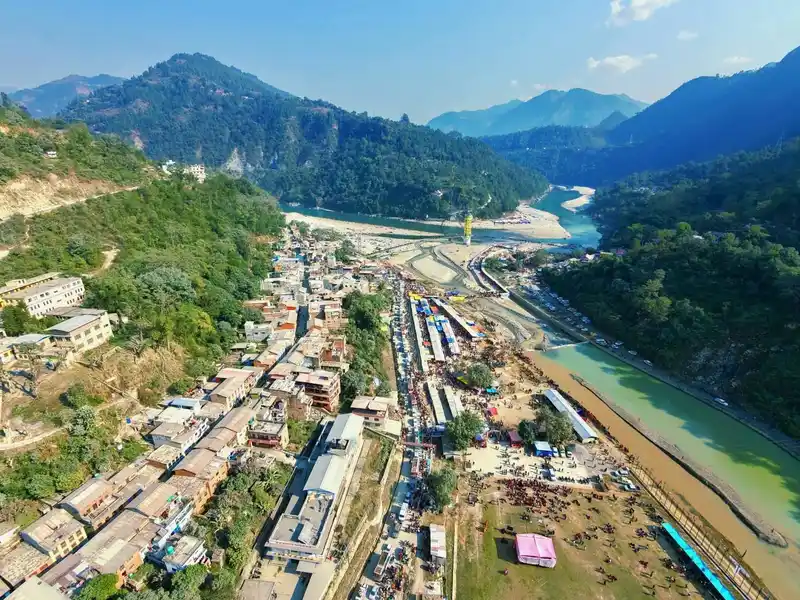
Ruru Kshetra, also known as Ridi, is a central Maghe Sankranti destination. It sits around the confluence of the Ridi Khola and Kali Gandaki, where Gulmi, Palpa, and Syangja meet. Pilgrims bathe in the Kali Gandaki, worship at Rishikesh Temple, and move through Ridi Mela with flowers, offerings, food stalls, local goods, and riverside crowds.
The Ridi mela is not only a bath and return event. It has a fair-like life of its own. People come for darshan, trade, family visits, local produce, river worship, and the old feeling of a mela that joins devotion with marketplace energy.
Devghat is another major Maghe Sankranti dham. The sacred area near the meeting of the Trishuli and Kali Gandaki/Narayani system draws large numbers of pilgrims for bathing and worship. Because Devghat is close to Narayangarh and Chitwan routes, it becomes reachable for many families, but the festival crowd can still be heavy.
Baraha Kshetra in Sunsari is especially meaningful for eastern Nepal. The dham is connected with Vishnu’s Varaha avatar and sits near the Koka and Koshi river area. On Makar Sankranti, many pilgrims from the hills and plains come for snan and darshan.
Panauti’s Triveni Ghat has a special place because of Makar Mela, the larger cycle festival held every twelve years during Magh. Even outside the twelve-year cycle, Panauti remains part of Nepal’s sacred sangam imagination, with Indreshwar Mahadev, Triveni Ghat, and old town pilgrimage life.
At a home, Maghe Sankranti may look simple: a bath, tika or blessings, a plate of ghee-chaku, til laddoo, tarul, yam, sweet potato, and warm food shared with family.
At a river ghat, it feels different.
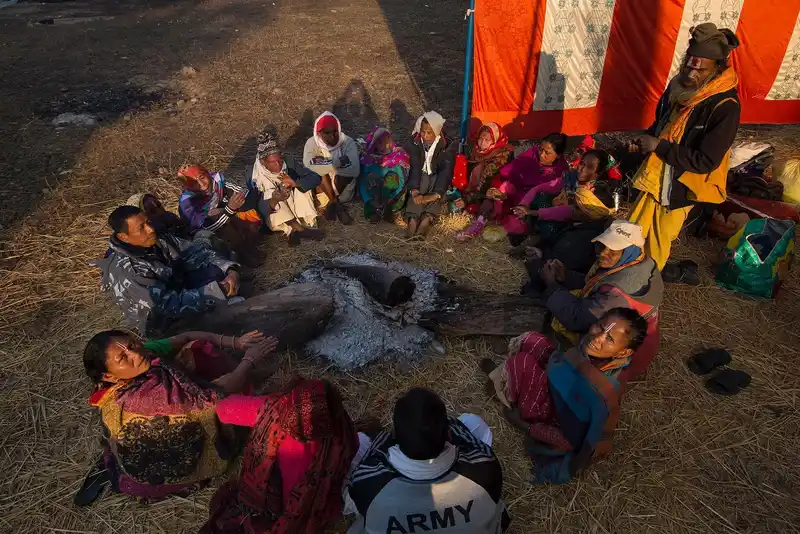
Pilgrims arrive early in shawls, jackets, and woolen caps. Some carry small bags with dry clothes. People step into cold water, offer prayers, visit temples, and warm themselves with tea or festival food afterward.
At Ridi, Devghat, and Baraha Kshetra, the scene becomes larger.
You may see temporary stalls, loudspeakers, police and volunteer lines, pilgrims drying clothes near the riverbank, sadhus sitting near fires, families searching for each other in the crowd, and vendors selling food, flowers, religious items, utensils, blankets, and local goods.
Food is a major part of the day.
Ghee and chaku are eaten together because the sweetness and fat feel right in the winter body. Til ko laddoo brings sesame and jaggery into the season. Tarul and yam make the plate earthy and filling. In many Madhesh and Tharu homes, khichadi or local Maghi dishes bring the same winter comfort in a different food language.
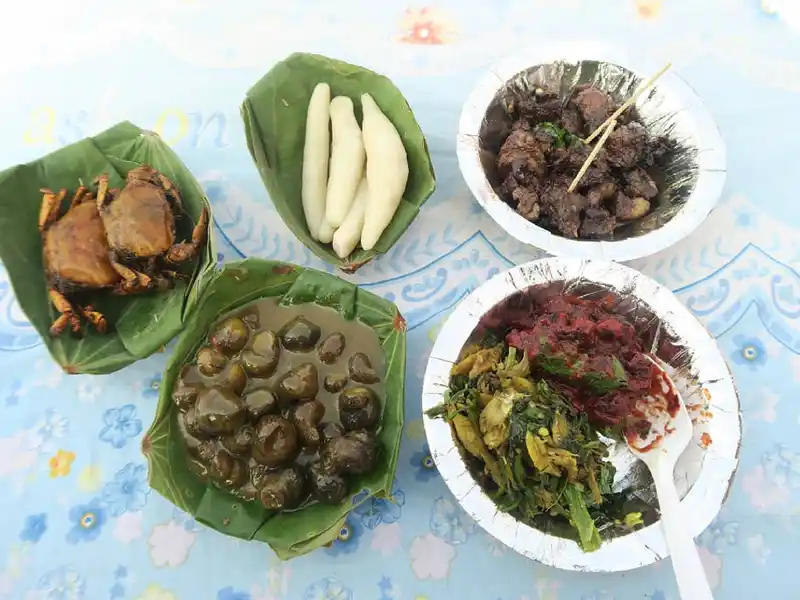
Ghee, Chaku, Til And Tarul
For many Nepali families, Maghe Sankranti is remembered through taste before theology. Chaku is a dark, sticky sweet usually made from concentrated sugarcane or jaggery. Til ko laddoo is made with sesame and jaggery or sugar. Tarul means yam, and families may also eat sweet potato, yam varieties, pindalu, and other roots.
These foods make sense in Magh. They are warming, filling, and seasonal. A plate of ghee-chaku and boiled tarul feels like winter in Nepal: simple, heavy, sweet, and shared.
Maghi In Tharu Communities
Maghi is a central festival for Tharu communities. It is often treated as the new year, especially in western Nepal. Families gather, cook, eat, visit relatives, sing, dance, and mark a fresh social beginning.
In some communities, Maghi is also a time for household and community decisions. The festival is not only about eating winter food; it renews family ties, village relationships, and the sense of starting another year together.
Maghe Sankranti In Magar Communities
For Magar communities, Maghe Sankranti is a major cultural festival with family gatherings, food, dance, and invitations to chelibeti. The word chelibeti refers to daughters and female relatives, and the day carries a strong family-respect feeling.
The festival also connects with seasonal movement. Traditional Magar explanations often speak of the turn from udheli to ubheli, a shift from the downward half of the year toward the upward half. Even when daily life has changed, the festival still holds that sense of seasonal turning.
River Melas And Local Markets
Maghe Sankranti melas are not only religious gatherings. They are also local markets. At places like Ridi and Devghat, people may come for snan and darshan, then spend time buying food, household items, blankets, utensils, sweets, toys, and local produce.
That is why the day feels so alive at river sites. Pilgrimage, trade, winter food, social meeting, and local economy all sit on the same riverbank.
If you want a simple Maghe Sankranti experience, a local river ghat, temple, or family observance may be enough. You will still see the heart of the day: bathing, worship, food, and blessings.
For Ruru/Ridi, plan earlier. The mela can draw large crowds, and accommodation near the festival area may be limited. Roads around Gulmi, Palpa, and Syangja routes can become busy, so it is better to check transport, lodging, and local notices before leaving.
For Devghat, expect heavy early-morning movement from Narayangarh, Chitwan, Tanahu, and nearby districts. The riverbank can be crowded, especially around the main bathing hours. Elders and children need warmer clothing, dry clothes, and a slower plan after snan.
For Baraha Kshetra, check the Dharan/Chatara side routes and local traffic arrangements. Pilgrims from eastern Nepal and nearby Indian border areas may come in large numbers.
Maghe Sankranti falls in winter, so holy bathing is physically demanding. Cold water, fog, early travel, slippery river stones, crowd pressure, and wet clothes can all affect the visit.
If you are travelling with elders, children, or anyone with health concerns, choose an easier ghat or focus on darshan and food instead of forcing a river bath.
What is Maghe Sankranti in Nepal?
Maghe Sankranti is a Nepali festival observed on the first day of Magh. Families eat ghee-chaku, til laddoo, tarul, yam, and other winter foods, while many pilgrims take holy baths at rivers and sangams.
Is Maghe Sankranti the same as Makar Sankranti?
They are connected. In Nepal, the festival is commonly called Maghe Sankranti, while Makar Sankranti refers to the sun’s transition into Makar rashi. The Nepali celebration has its own local foods, river melas, Maghi traditions, and pilgrimage sites.
Why do people eat ghee and chaku on Maghe Sankranti?
Ghee and chaku are warming winter foods. Chaku is a dark sweet made from jaggery or sugarcane, and ghee adds richness. Together with sesame sweets, tarul, yam, and sweet potato, they make a seasonal festival meal for cold Magh weather.
Where do people go for holy bathing on Maghe Sankranti?
Major bathing places include Ruru Kshetra/Ridi, Devghat, Baraha Kshetra, Panauti Triveni, Sankhamul, Dolalghat, and many local river confluences across Nepal.
What is Ridi Mela?
Ridi Mela is the Maghe Sankranti fair at Ruru Kshetra, near the meeting of the Ridi Khola and Kali Gandaki. Pilgrims bathe, worship at Rishikesh Temple, visit the mela, and spend time around the sacred riverbank.
What is Maghi?
Maghi is the name used by Tharu communities for the festival around Maghe Sankranti. It is a major new-year festival with family gatherings, food, dance, visits, and community renewal.
Is Maghe Sankranti only a Hindu festival?
Maghe Sankranti has Hindu sacred meaning through Surya, Vishnu, river bathing, and daan, but in Nepal it is also a cultural festival shared across communities in different ways. Tharu, Magar, Newar, Madheshi, hill, and city families may observe the day with different names and customs.